To enhance service speed and avoid tariff delays, we've opened a US warehouse. All US orders ship directly from our US facility.
| Cat. No. | Product Name | Field of Application | Chemical Structure |
|---|---|---|---|
| DC70010 | 98N12-5 Featured |
98N12-5 is an ionizable cationic lipid. It has been used in combination with other lipids in the generation of lipid nanoparticles (LNPs). LNPs containing 98N12-5 and encapsulating proprotein convertase subtilisin kexin type 9 (PCSK9) siRNA selectively accumulate in the liver and reduce total serum cholesterol levels in mice and rats and serum LDL levels in cynomolgus monkeys.
More description
|
|
| DC82209 | ORNA Lipid 10a-26 (TFA salt) Featured |
Lipid 10a-26 is an ionizable lipid developed by Orna Therapeutics for lipid nanoparticle (LNP) formulations. Lipid 10a-26 is a key ionizable lipid in the LNP-6 formulation. Through structural modification, it exhibits reduced binding to ApoE proteins and lowered liver affinity compared to traditional ionizable lipids. Instead, Lipid 10a-26 demonstrates strong splenic tropism—in non-human primate studies, it effectively delivers payloads to the spleen and immune cells in peripheral blood, such as T cells, NK cells, and macrophages, enabling the possibility of "in vivo CAR-T" therapy. Its pKa is tuned to approximately 6.0–6.5, allowing rapid protonation in the acidic endosomal environment, which promotes endosomal membrane disruption and efficient cytosolic release of circular RNA.
More description
|
|
| DC99010 | Capstan lipid CICL-1(L829) Featured |
CICL1 (L829) is a novel ionizable cationic lipid specifically engineered for targeted lipid nanoparticles (tLNPs) that enables efficient in vivo delivery of mRNA payloads to CD8+ T cells. Designed to overcome limitations of conventional LNPs, CICL-1 (L-829)significantly reduces off-target delivery to the liver and exhibits rapid clearance compared to benchmark lipids like ALC-0315, while demonstrating enhanced biodegradability and tolerability in rodent and primate models. When incorporated into CD8-targeted tLNPs, CICL 1 (L829 enables preferential transfection of CD8+ T cells over other immune subsets, facilitating the generation of functional anti-CD19 or anti-CD20 CAR T cells directly *in vivo*. These tLNP-engineered CAR T cells mediate rapid, deep B-cell depletion in humanized mice and cynomolgus monkeys, with repopulating B cells exhibiting a naïve phenotype suggestive of immune reset. By eliminating the need for ex vivo manufacturing or lymphodepleting chemotherapy, the L829-tLNP platform represents a safer, scalable approach for accessible CAR T therapy in oncology and autoimmune diseases.
More description
|
|
| DC67567 | ARV-T1 Featured |
ARV-T1 is a novel ionizable lipid featuring a cholesterol moiety incorporated in its tail, designed to enhance mRNA delivery efficiency. With a pKa of 6.73, it exhibits optimal pH-dependent ionization for endosomal escape and mRNA release. Structurally, ARV-T1 contains a tertiary amine head group and ester-linked lipid tails, enabling rapid in vivo metabolism and improved biocompatibility.Compared to SM-102 (used in Moderna's vaccine), LNPs formulated with ARV-T1 demonstrate superior physicochemical properties: smaller particle size (~80 nm vs. 90 nm), lower polydispersity index (0.09 vs. 0.10), and higher absolute zeta potential (-10 mV vs. -5 mV). These characteristics correlate with >90% mRNA encapsulation efficiency and enhanced stability, maintaining performance for 12 weeks at -20°C.In vitro, ARV-T1 LNPs showed 7-fold higher protein expression than SM-102 LNPs. In vivo, they prolonged luciferase expression (>72 hours vs. <48 hours for SM-102) and induced 10-fold higher neutralizing antibodies against SARS-CoV-2 spike protein at low doses. The cholesterol tail promotes endosomal membrane fusion, while ester linkages facilitate metabolic clearance, yielding an excellent safety profile in toxicity studies. This combination of efficacy and safety positions ARV-T1 as a promising platform for mRNA vaccines and therapeutics.
More description
|
|
| DC67569 | Lipid S4 Featured |
Lipid S4 is an advanced ionizable lipid engineered for systemic mRNA delivery to the brain, leveraging SR-57227—a high-affinity 5-HT3 receptor ligand—as its core head group to enable targeted blood-brain barrier (BBB) penetration via receptor-mediated transcytosis, while incorporating amino linkers for pH-responsive ionization and biodegradable branched ester tails to facilitate efficient endosomal escape and intracellular mRNA release; optimized through orthogonal screening into OS4 LNP (formulated at S4/DOPE/Chol/DMG-PEG2k = 40:40:60:0.75 molar ratio), it demonstrated a 13.3-fold increase in brain mRNA expression compared to FDA-approved MC3 LNPs, and further conjugation with the Tat cell-penetrating peptide yielded OS4T LNP, boosting delivery efficiency by 12.7-fold over OS4 alone and enabling broad mRNA expression across neurons, astrocytes, microglia, and endothelial cells; validated in orthotopic glioblastoma models, OS4T delivered engineered IL-12 mRNA, suppressing tumor growth and extending median survival to 37 days (vs. 17 days for controls) with minimal systemic toxicity, positioning S4-based LNPs as a robust, translatable platform for CNS-targeted therapeutics.
More description
|
|
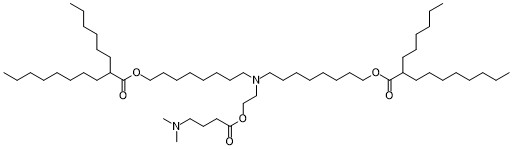
| DC82125 | lipid 14 Featured |
LIPID 14 is a novel ionizable lipid used for mRNA delivery.In 2021, Elia et al. used lipid 2 LNPs and lipid 14 LNPs to deliver mRNA encoding SARSCoV-2 human Fc-conjugated receptor binding domain (RBDhFc
mRNA). While both lipid 274 LNP RBD-hFc mRNA and
lipid 14 LNP RBD-hFc mRNA induced equal cellular and
humoral responses in mice at an mRNA dose of 5 μg, only lipid
14 LNP RBD-hFc mRNA exhibited strong immunogenicity
following intradermal administration. Both intradermal administration
and intramuscular administration of lipid 14 LNPs
could activate antigen presenting cells (APCs), thus inducing
cellular responses.
More description
|
|
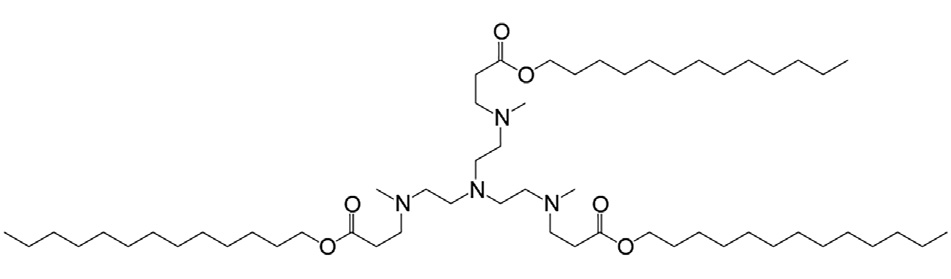
| DC86070 | 304O13 Featured |
304O13 is a novel Biodegradable lipidoid for RNA delivery.
More description
|
|
| DC67536 | Lipid A1-EP10-O18A |
A1-EP10-O18A is an asymmetric ionizable lipid developed by Starna Therapeutics for mRNA vaccine delivery. Synthesized via Michael addition between amine alcohols and acrylates, its optimized structure—combining a hydrophilic C10 chain and hydrophobic unsaturated C18 tail—enables pH-dependent ionization. As the core component of the STAR0225 lipid nanoparticle (LNP) platform, it efficiently encapsulates mRNA and facilitates endosomal escape. Preclinical studies demonstrate superior in vivo mRNA delivery (vs. commercial SM102 LNPs), with enhanced local biodistribution and minimal off-target accumulation. This lipid underpins STR-V003, an RSV prefusion F mRNA vaccine showing robust immunogenicity and protection in animal models, supporting its clinical transition (NCT06344975).
More description
|

|
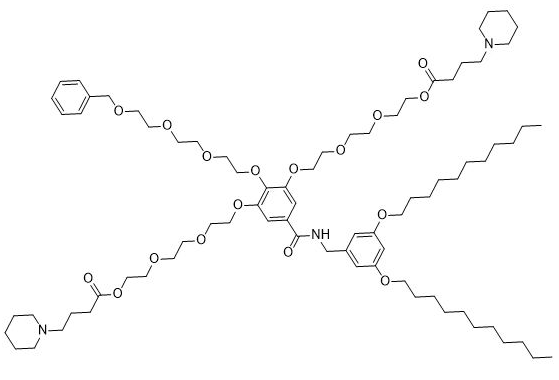
| DC67292 | IAJD34 Featured |
IAJD-34 is a one-component ionizable amphiphilic Janus dendrimer specifically engineered for targeted mRNA delivery to the lung parenchyma, as described by Meshanni et al. in Nature Communications article "Targeted delivery of TGF-β mRNA to murine lung parenchyma using one-component ionizable amphiphilic Janus Dendrimers" . This synthetic nanoparticle self-assembles with mRNA through simple mixing in acetate buffer, forming stable dendrimersomes approximately 93-97 nm in size with high encapsulation efficiency (>95%) and a positive zeta potential (~48 mV). Its defining feature, highlighted in the study, is exceptional lung tropism after intravenous injection, enabling significantly higher luciferase expression in murine lungs compared to other organs. As demonstrated by Meshanni et al., IAJD 34 effectively delivers therapeutic mRNA (e.g., TGF-β mRNA) to the lower lung, inducing transient protein production with minimal systemic toxicity at appropriate doses (e.g., 10 µg), offering a promising strategy for treating parenchymal lung diseases.
More description
|
|
| DC60489 | LIPID 331 Featured |
Lipid 331 is a biodegradable cyclic ionizable lipid. LNPs containing Lipid 331 result in robust transfection in the nasal and lung tissues of mice and efficient transfection of lung epithelial cells and lung-resident APCs. Lipid 331 is a promising candidate for mRNA vaccine delivery, offering the potential for further enhancing the potency of mRNA vaccines.
More description
|
|
| DC67564 | C-a16 Featured |
C-a16 is an ionizable lipid engineered through Mannich reaction chemistry, designed to revolutionize mRNA delivery by synergizing high efficiency with minimized immune activation. Synthesized by reacting a phenolic tail derivative, formaldehyde, and a branched tertiary amine core under optimized ethanol conditions, this lipid integrates antioxidant phenol groups directly into its structure. These phenol moieties serve as intrinsic radical scavengers, effectively neutralizing intracellular reactive oxygen species that typically degrade mRNA and trigger inflammation.In lipid nanoparticle formulations, C-a16 constitutes the functional backbone, enabling superior mRNA encapsulation efficiency while maintaining a stable nanoparticle size of approximately 80–100 nm. Critically, it outperforms conventional lipids like DLin-MC3-DMA by achieving significantly higher target-protein expression in vivo alongside markedly reduced pro-inflammatory cytokine secretion. The antioxidant capability is not incidental but fundamental—quenching the phenol groups drastically diminishes both ROS suppression and delivery efficacy, confirming the design's mechanistic elegance.C-a16 represents a paradigm shift: its biomimetic antioxidant architecture addresses the chronic trade-off between delivery potency and immunogenicity, unlocking safer therapeutic applications for vaccines and gene therapies.
More description
|
|
| DC67294 | Lipid B1 |
Lipid B1 is a next-generation ionizable lipid engineered for superior mRNA delivery, featuring a patented β-isobutylglutarate branching linker that optimizes nanoparticle assembly and intracellular release. Its unique structure combines a pH-responsive tertiary amine headgroup with twin C18 alkyl tails connected via biodegradable ester bonds, enabling precise control over lipid packing and endosomal escape. Preclinical studies demonstrate that Lipid B1-based LNPs (bLNPs) achieve **>75% transfection efficiency in vitro at ultra-low mRNA doses (1 μg), outperforming commercial benchmarks like SM-102. In vivo, subcutaneous administration of bLNPs delivers 10-fold higher luciferase expression** than linear-chain analogs, with targeted biodistribution to lymph nodes and tumor sites. Clinically relevant data show 100% tumor prevention in prophylactic cancer vaccine models and 70% tumor regression in therapeutic settings when combined with checkpoint inhibitors. The ester-based backbone ensures rapid metabolic clearance, minimizing systemic toxicity risks (NOAEL >10 mg/kg in mice). Compatible with mRNA, siRNA, and CRISPR-Cas9 payloads, Lipid B1 is ideal for vaccines, gene therapies, and immuno-oncology. Its scalable 3-step synthesis (yield >80%) and lyophilization stability (-80°C, 12 months) make it a cost-effective solution for GMP-grade production. For advanced delivery with unmatched safety and efficacy, Lipid B1 sets a new standard in nucleic acid therapeutics.
More description
|
|
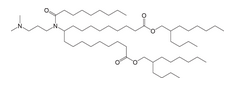
| DC57100 | Acuitas A9 Featured |
Lipid A9 is an ionizable cationic lipid (pKa = 6.27) that has been used in the generation of lipid nanoparticles (LNPs) for the delivery of mRNA and siRNA in vivo. LNPs containing lipid A9 and encapsulating non-stimulatory siRNA increase plasma levels of chemokine (C-C motif) ligand 2 (CCL2), indicating activation of the innate immune response, and decrease body weight in mice.
More description
|
|
| DC42537 | ALC-0315 Featured |
ALC-0315 is an ionisable aminolipid that used for mRNA compaction and aids mRNA cellular delivery. ALC-0315 can be used to form lipid nanoparticle (LNP) delivery vehicles.
More description
|
|
| DC60509 | 4A3-SCC-PH Featured |
4A3-SCC-PH is a groundbreaking linker-degradable ionizable lipid (LDIL) that features a glutathione (GSH)-responsive cone-shaped molecular structure. This unique architecture enables superior endosomal escape and rapid mRNA release, making it highly effective for mRNA delivery. In vivo studies have highlighted its exceptional performance, showing a 176-fold increase in mRNA delivery efficiency to the liver compared to DLin-MC3-DMA, a widely used benchmark lipid. Both 4A3-SCC-PH and its structural analog, 4A3-SCC-10, also demonstrated significantly enhanced mRNA delivery efficacy compared to their non-disulfide-containing parent compounds and disulfide-containing controls with modified lipid tails.
More description
|

|
| DC49257 | DLin-K-C3-DMA Featured |
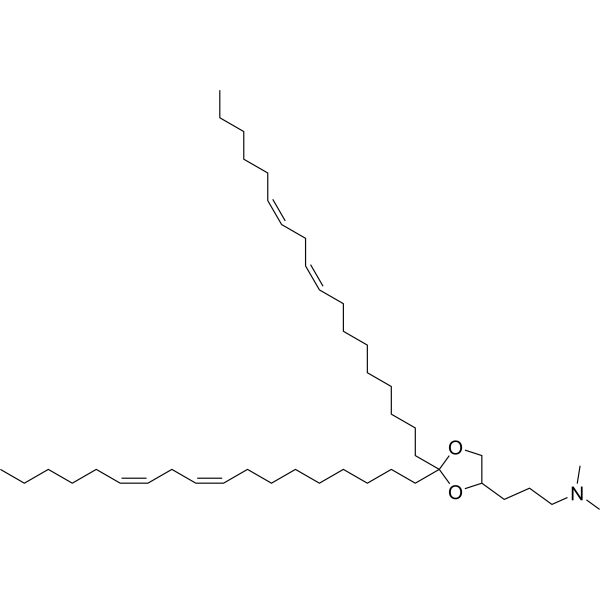
DLin-KC3-DMA, a nucleic acid, shows in vivo silencing activity. DLin-K-C3-DMA can be used in the synthesis of nucleic acid-lipid particle to delivery of nucleic acid.
More description
|
|
| DC57002 | LIPID C24 Featured |
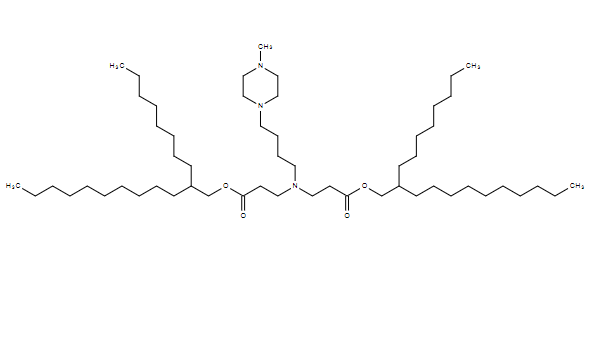
C24 is a novel multiprotic ionizable lipid. C24 lipid nanoparticle (LNP) has a multistage protonation behavior resulting in greater endosomal protonation and greater translation compared to the standard reference MC3 LNP. C24 LNP also lower injection site inflammation and higher stability compared to MC3 LNP.
More description
|
|

| DC81110 | Lipid 202 (L202) Featured |
L202 is an ionizable lipid designed for mRNA vaccines, featuring a pH-responsive N-methylpiperidine head and a unique branched-tail structure with ester linkages to enable biodegradability. With a pKa of ~6.04–6.29, it facilitates efficient endosomal escape while maintaining stability in physiological conditions. Formulated into lipid nanoparticles (LNPs) of ~103 nm (PDI 0.08), L202 achieves >97% mRNA encapsulation efficiency. Its optimized structure drives robust immunogenicity: in mice, a single 0.1–10 μg dose induced dose-dependent SARS-CoV-2 spike-specific IgG titers, outperforming MC3-based LNPs and protein-alum vaccines. L202-LNPs elicited balanced Th1/Th2 responses (IgG2a/IgG1 ratio) and potent germinal center B cell activation, critical for durable immunity. Lyophilization with 16% sucrose preserved mRNA integrity and immunogenicity after 1-month storage at 5°C or 25°C, addressing cold-chain limitations. In nonhuman primates, two 100-μg doses generated neutralizing antibody titers exceeding convalescent human sera, with broad efficacy against Alpha, Beta, Gamma, and Delta variants. Rapid tissue clearance (72 hours post-injection) and minimal hepatic accumulation, attributed to ester hydrolysis, enhanced safety profiles. Additionally, L202-LNPs functioned as intrinsic adjuvants, amplifying protein vaccine responses. Combined with its lyophilization compatibility, potent cross-variant immunity, and favorable pharmacokinetics, L202 represents a promising platform for next-generation mRNA vaccines.
More description
|
|
| DC60575 | U-101 Featured |
U-101 is an ionizable lipid for mRNA delivery. U101-LNP/IL-2F mRNA formulation demonstrats effective antitumor activity and safety.LNPs containing lipid U 101 and encapsulating mRNA encoding a fusion protein composed of IL-2, a linker, and CD25 inhibit tumor growth in an MC-38 mouse xenograft model.
More description
|
|