Alternate TextTo enhance service speed and avoid tariff delays, we've opened a US warehouse. All US orders ship directly from our US facility.
Home > RNA Delivery > Cationic/Ionizable Lipids > Classic ionizable lipids for RNA delivery

Classic ionizable lipids for RNA delivery

You can also try the following methods, and our professionals will serve you Customized Consultation
Cat. No. Product Name Field of Application Chemical Structure
DC82102 PPZ-A10 Featured
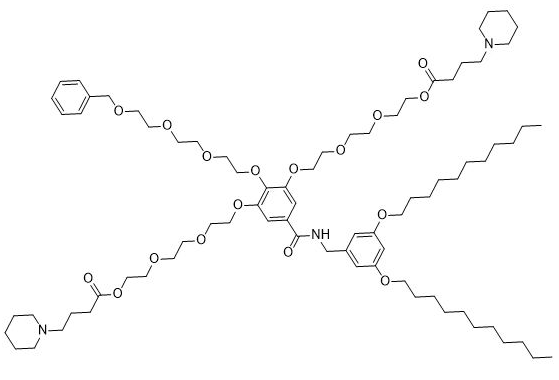
PPZ-A10 is an ionizable cationic lipid.It has been used in the generation of lipid nanoparticles (LNPs) for the delivery of siRNA and mRNA in vitro and in vivo. Intraperitoneal administration of LNPs containing PPZ-A10 and encapsulating an mRNA reporter preferentially accumulates in hepatic Kupffer cells and splenic macrophages in mice.
More description
DC82105 93-O17O Featured
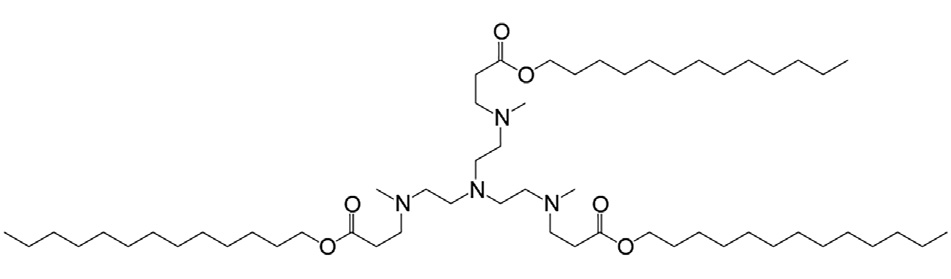
93-O17O is a chalcogen-containing ionizable cationic lipidoid. It has been used in the generation of lipid nanoparticles (LNPs). LNPs containing 93-O17O localize to the spleen after intravenous injection into mice.LNPs containing 93-O17O have been used for the delivery of Cre recombinase and ribonucleoproteins for genome editing in mice and for the intratumoral delivery of cGAMP to enhance cross-presentation of tumor antigens.
More description
DC66219 Lipid 88 Featured
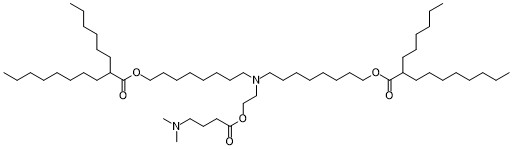
Lipid88​​ is a high-performance, novel ionizable lipid component engineered for advanced mRNA-LNP vaccine delivery. LNP88 formulation demonstrates superior biodistribution, achieving >10-fold higher transfection efficiency in spleen and lymph nodes compared to benchmark lipids like ALC-0315 via intramuscular delivery. When encapsulating antigen-encoding mRNA (e.g., optimized mCSA construct), Lipid-88 based LNPs drive robust humoral and cellular immunity, enabling complete protection against challenging SARS-CoV-2 variants (WA1/2020, Omicron BA.1, BQ.1) in preclinical models. Its design prioritizes potent immunogenicity with favorable safety profiles.
More description
DC59010 C14-4 Featured
C14-4 (C14-494,Lipid B-4,Lipid B4) is a novel ionizable lipid with the highest T-cell transfection efficiency and low cytotoxicity.The C14-4 ionizable lipid has been explored for CAR-T therapy.To screen the excellent formulations for mRNA delivery, a lipid library of 24 ionizable lipids was constructed to make iLNPs, which were used to deliver luciferase mRNA into Jurkat cells.[115] The optimal iLNPs formulation was C14-4 iLNPs (C14-4 ionizable lipid, DOPE, chol, and PEG at a molar ratio of 35%, 16%, 46.5%, and 2.5%) (Figure 6c). The optimal dose of luciferase mRNA for C14-4 iLNPs was 30 ng. Compared with electroporated CAR T cells, the CAR T cells engineered via C14-4 iLNPs showed potent cancer-killing activity when they were cocultured with Nalm-6 acute lymphoblastic leukemia cells. To obtain a safer and more effective CAR mRNA delivery vehicle, the orthogonal design provided 256 potential formulations, and 16 representative iLNPs formulations were evaluated.Through evaluating the safety, delivery efficiency, and transfection efficiency of 16 iLNPs, the formulation B10 (C14-4 ionizable lipid, DOPE, chol, PEG at a molar ratio of 40%, 30%, 25%, and 2.5%) was screened out as the optimal performing formulation. The luciferase expression based on B10 formulation was increased threefold than the initial formulation. Reducing the accumulation and clearance of iLNPs in the liver can increase the expression of CAR mRNA in T cells, further improving the therapeutic effect of CAR-T. Studies have shown that cholesterol analogs can alter the mechanisms of intracellular circulation and enhance the delivery of mRNA, which may be related to the reduced recognition of iLNPs by the Niemann Pick C1 (NPC1) enzyme.The addition of a hydroxyl group to various locations in the cholesterol molecule can alter the binding kinetics between the modified cholesterol and NPC1, and reduced NPC1 recognition of cholesterol. The results showed that replacement of 25% and 50% 7 α-hydroxycholesterol for cholesterol in iLNPs improved mRNA delivery to primary human T cells in vitro by 1.8-fold and twofold, respectively.C14-4 is one of the ionizable lipids to efficiently deliver mRNA to Jurkat cells or primary human T cells. It will effectively promote the development of mRNA delivery by iLNPs for CAR-T therapy.
More description
DC60808 503O8,12 Featured
503O8,12​​ is an ionizable lipidoid synthesized via Michael addition, combining a hydrophilic amine headgroup ("503" series) with two hydrophobic branched acrylate tails (C8 and C12 chains, likely with unsaturated bonds). Its design emphasizes organ-specific delivery, exhibiting ​​spleen-tropic targeting​​ in vivo.
More description
DC67120 YSK12-C4 (YSK12-MEND) Featured
YSK 12C4 is an ionizable cationic lipid primarily used to enhance siRNA cellular delivery via multifunctional envelope-type nanodevices (MEND). YSK 12C4 promotes siRNA uptake and endosomal escape, effectively silencing genes in human immune cell lines.
More description
DC60503 C12-A1 Featured
Lipid C12-A1 is an ionizable lipid. C12-A1-LPN is a potent and safe LNP platform to deliver Foxp3 mRNA to CD4+ T cells to engineer immunosuppressive FP3T cells. C12-A1 has a slightly lower average cell viability than C14-A1.
More description
DC60499 C14-A1 Featured
Lipid C14-A1 is an ionizable lipid. C14-A1-LPN is a potent and safe LNP platform to deliver Foxp3 mRNA to CD4+ T cells to engineer immunosuppressive FP3T cells.
More description
DC67521 Lipid TD5 Featured
TD5 is a brain-targeting lipid nanoparticle (BLNP) engineered for efficient mRNA delivery to the central nervous system (CNS) via intrathecal injection. It incorporates a tryptamine-derived ionizable lipid headgroup, myristic acid hydrocarbon tails, and a biodegradable carbonate ester linker, enabling pH-dependent mRNA encapsulation (81.7% efficiency) and brain cell-specific targeting. With a hydrodynamic diameter of 107.5 nm, near-neutral pKa (7.30), and mild positive charge, TD 5 demonstrates superior CNS tropism through serotonin receptor (5-HT1A)-mediated endocytosis. In vitro, TD-5 achieved 80.8% GFP expression in SH-SY5Y neuronal cells, outperforming MC3 LNPs by 50-fold. Following intrathecal administration in mice, TD-5 mediated GFP expression in 29.6% of neurons and 38.1% of astrocytes brain-wide, with 10-fold higher CNS specificity than peripheral organs. Genome editing studies showed TD5-delivered Cas9/sgRNA induced tdTomato activation in ≈30% of neurons and 40% of astrocytes across key brain regions. Safety profiling revealed minimal systemic immune responses (lower IL-6, IL-12p40 vs MC3 LNPs), normal hepatic/renal biomarkers, and no histopathological toxicity. The optimized structure balances myristic chain hydrophobicity for membrane interaction, ionizable amines for mRNA complexation, and tryptamine-mediated targeting for enhanced CNS uptake, establishing TD5 as a promising platform for CNS gene therapies.
More description
DC67295 Lipid MK16 Featured
MK-16 is a specialized lipid designed to traverse the blood-brain barrier (BBB) for effective mRNA delivery. Its formulation, MK 16 BLNP, leverages dual mechanisms involving caveolae and γ-secretase to facilitate BBB penetration, ensuring the targeted and efficient transport of functional mRNA to diverse brain cell types. Demonstrating excellent tolerability across a range of dosing regimens, MK16 BLNP represents a promising platform for brain-targeted therapeutic applications.
More description
DC60212 NT1-O14B Featured
NT1-O14B is a tryptamine-containing cationic lipidoid.1 It has been used in combination with other lipids in the formation of lipid nanoparticles (LNPs). Intravenous administration of LNPs containing NT1-O14B and encapsulating antisense nucleotides against tau decreases tau brain levels in mice.
More description
DC41043 NT1-O12B Featured
NT1-O12B, an endogenous chemical and a neurotransmitter-derived lipidoid (NT-lipidoid), is an effective carrier for enhanced brain delivery of several blood-brain barrier (BBB)-impermeable cargos. Doping NT1-O12B into BBB-impermeable lipid nanoparticles (LNPs) gives the LNPs the ability to cross the BBB. NT-lipidoids formulation not only facilitate cargo crossing of the BBB, but also delivery of the cargo into neuronal cells for functional gene silencing or gene recombination.
More description
DC57100 Acuitas A9 Featured
Lipid A9 is an ionizable cationic lipid (pKa = 6.27) that has been used in the generation of lipid nanoparticles (LNPs) for the delivery of mRNA and siRNA in vivo. LNPs containing lipid A9 and encapsulating non-stimulatory siRNA increase plasma levels of chemokine (C-C motif) ligand 2 (CCL2), indicating activation of the innate immune response, and decrease body weight in mice.
More description
DC42537 ALC-0315 Featured
ALC-0315 is an ionisable aminolipid that used for mRNA compaction and aids mRNA cellular delivery. ALC-0315 can be used to form lipid nanoparticle (LNP) delivery vehicles.
More description
DC60509 4A3-SCC-PH Featured
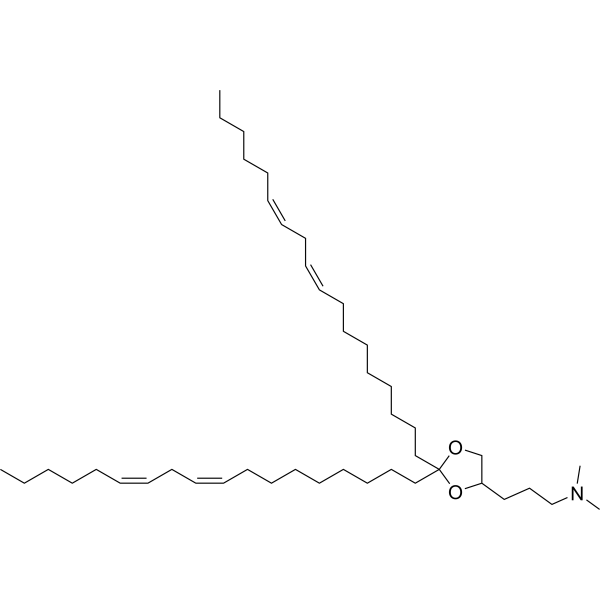
4A3-SCC-PH is a groundbreaking linker-degradable ionizable lipid (LDIL) that features a glutathione (GSH)-responsive cone-shaped molecular structure. This unique architecture enables superior endosomal escape and rapid mRNA release, making it highly effective for mRNA delivery. In vivo studies have highlighted its exceptional performance, showing a 176-fold increase in mRNA delivery efficiency to the liver compared to DLin-MC3-DMA, a widely used benchmark lipid. Both 4A3-SCC-PH and its structural analog, 4A3-SCC-10, also demonstrated significantly enhanced mRNA delivery efficacy compared to their non-disulfide-containing parent compounds and disulfide-containing controls with modified lipid tails.
More description
DC49257 DLin-K-C3-DMA Featured
DLin-KC3-DMA, a nucleic acid, shows in vivo silencing activity. DLin-K-C3-DMA can be used in the synthesis of nucleic acid-lipid particle to delivery of nucleic acid.
More description
DC57002 LIPID C24 Featured
C24 is a novel multiprotic ionizable lipid. C24 lipid nanoparticle (LNP) has a multistage protonation behavior resulting in greater endosomal protonation and greater translation compared to the standard reference MC3 LNP. C24 LNP also lower injection site inflammation and higher stability compared to MC3 LNP.
More description
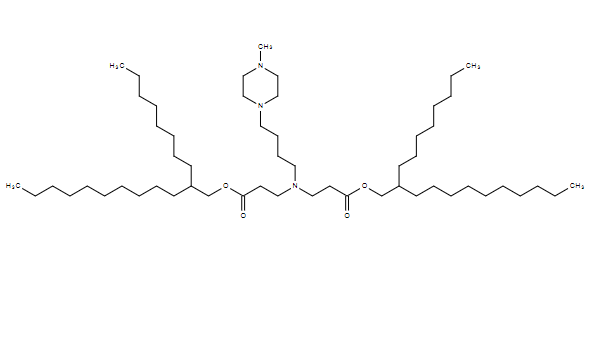
DC81110 Lipid 202 (L202) Featured
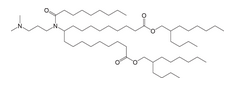
L202 is an ionizable lipid designed for mRNA vaccines, featuring a pH-responsive N-methylpiperidine head and a unique branched-tail structure with ester linkages to enable biodegradability. With a pKa of ~6.04–6.29, it facilitates efficient endosomal escape while maintaining stability in physiological conditions. Formulated into lipid nanoparticles (LNPs) of ~103 nm (PDI 0.08), L202 achieves >97% mRNA encapsulation efficiency. Its optimized structure drives robust immunogenicity: in mice, a single 0.1–10 μg dose induced dose-dependent SARS-CoV-2 spike-specific IgG titers, outperforming MC3-based LNPs and protein-alum vaccines. L202-LNPs elicited balanced Th1/Th2 responses (IgG2a/IgG1 ratio) and potent germinal center B cell activation, critical for durable immunity. Lyophilization with 16% sucrose preserved mRNA integrity and immunogenicity after 1-month storage at 5°C or 25°C, addressing cold-chain limitations. In nonhuman primates, two 100-μg doses generated neutralizing antibody titers exceeding convalescent human sera, with broad efficacy against Alpha, Beta, Gamma, and Delta variants. Rapid tissue clearance (72 hours post-injection) and minimal hepatic accumulation, attributed to ester hydrolysis, enhanced safety profiles. Additionally, L202-LNPs functioned as intrinsic adjuvants, amplifying protein vaccine responses. Combined with its lyophilization compatibility, potent cross-variant immunity, and favorable pharmacokinetics, L202 represents a promising platform for next-generation mRNA vaccines.
More description
DC60575 U-101 Featured
U-101 is an ionizable lipid for mRNA delivery. U101-LNP/IL-2F mRNA formulation demonstrats effective antitumor activity and safety.LNPs containing lipid U 101 and encapsulating mRNA encoding a fusion protein composed of IL-2, a linker, and CD25 inhibit tumor growth in an MC-38 mouse xenograft model.
More description

Customized Consultation X

Your information is safe with us. * Required Fields.

Your name
Company
Email
Procuct Name
Cat. No.
Remark
Verification code
Please fill out the characters in the picture
X