 To enhance service speed and avoid tariff delays, we've opened a US warehouse. All US orders ship directly from our US facility.
| Cat. No. | Product Name | Field of Application | Chemical Structure |
|---|---|---|---|
| DC81797 | ZY39 |
ZY39 is a SaClpP agonist. ZY39 promotes the enzymatic hydrolysis of SaClpP and HsClpP in vitro. ZY39 inhibits the growth of Staphylococcus aureus strains. ZY39 reduces the load of Staphylococcus aureus in organs and ascites in mouse peritonitis models and zebrafish infection models, and improves the survival rate of model animals. ZY39 can be used in studies related to Staphylococcus aureus infection, such as peritonitis.
More description
|

|
| DC81658 | TMLB-C16 |
TMLB-C16 is a potent and orally active B3GAT3 inhibitor with a KD of 3.962 μM. TMLB-C16 suppresses proliferation and migration, and induces cell cycle arrest and apoptosis in MHCC-97H (IC50 = 6.53 μM) and HCCLM3 cells (IC50 = 6.22 μM). TMLB-C16 inhibits tumor growth in both MHCC-97H and HCCLM3 xenograft tumor mouse models without causing obvious toxicity. TMLB-C16 can be used for hepatocellular carcinoma research.
More description
|
|
| DC81647 | TKP-5 |
TKP-5 is a PROTAC protein degrader targeting BRD4. TKP-5 can binds to BRD2, BRD3, BRD4 and BRDT, with Ka values of 150 nM, 100 nM and 150 nM for the first three proteins respectively. TKP-5 inhibits the production of thymic stromal lymphopoietin and suppresses the expression of IL-33 mRNA. TKP-5 is applicable to studies related to tape-stripping induced skin injury.
(Pink: Epigenetic Reader Domain ligand ; Blue: Cereblon ligand ; Black: linker).
More description
|
|
| DC81271 | PF-07245303 |
PF-07245303 is a ITK/TRK inhibitor. PF-07245303 reduces the production of inflammatory cytokines such as IL-4 and IFNγ, and inhibits the phosphorylation of PLCγ1. PF-07245303 inhibits nerve growth factor-induced basophil activation and the phosphorylation of TRKA. PF-07245303 reduces oxazolone-induced ear swelling in mouse ear tissues. PF-07245303 is applicable to research related to atopic dermatitis.
More description
|
|
| DC81234 | PARP1/c-Met-IN-3 |
PARP1/c-Met-IN-3 (Compound L19) is a selective c-Met and PARP1 inhibitor, with an IC50 of 5.4 nM against c-Met and an IC50 of 3.7 nM against PARP1. PARP1/c-Met-IN-3 inhibits PARP2 enzymatic activity with an IC50 of 4.52 nM, and shows no specificity for PARP1 and PARP2. PARP1/c-Met-IN-3 induces cell cycle arrest and apoptosis. PARP1/c-Met-IN-3 exhibits anti-tumor activity against triple-negative breast cancer.
More description
|
|
| DC81067 | MNK/PIM-IN-2 |
MNK/PIM-IN-2 is a Mnk/Pim kinase inhibitor with an IC50 of 32 nM for Mnk1, 3 nM for Mnk2, and 37 nM for Pim1. MNK/PIM-IN-2 reduces the levels of p-eIF4E and p-4EBP1. MNK/PIM-IN-2 induces cell cycle arrest, apoptosis (apoptosis) and exerts antiproliferative effects in leukemia cells. MNK/PIM-IN-2 can be used in studies related to leukemia.
More description
|
|
| DC80892 | JRC-I-191 |
JRC-I-191 is an anti-HIV-1 agent. JRC-I-191 inhibits HIV-1 YU-2 entry into cells. JRC-I-191 does not inhibit infection of cells by amphotropic murine leukemia virus. JRC-I-191 can be used for the research of HIV-1 infection.
More description
|
|
| DC80841 | Ikarisoside B |
Ikarisoside B is a potent and selective Organic cation transporter 1 (OCT1) inhibitor with an IC50 of 11.18 μM. Ikarisoside B shows selectivity over OCT2 (IC50 = 56.54 μM). Ikarisoside B can be used for the research of metabolic disease.
More description
|
|
| DC80726 | GPR119 agonist 4 |
GPR119 agonist 4 is a GPR119 agonist and oral glucose-lowering agent with a human GPR119 EC50 of 42 nM.GPR119 agonist 4 activates GPR119.GPR119 agonist 4 reduces blood glucose area under the curve in an oral glucose tolerance test.GPR119 agonist 4 exhibits improved clearance in liver microsomes.GPR119 agonist 4 can be used for the research of type 2 diabetes mellitus.
More description
|
|
| DC80654 | FGFR3-IN-12 |
FGFR3-IN-12 is a selective fibroblast growth factor receptor 3 (FGFR3) inhibitor with an IC50 of 6.8 nM. FGFR3-IN-12 shows an IC50 of 19.2 nM against FGFR3V555M and an IC50 of 16.9 nM against TNK1 (Thirty-eight Negative Kinase 1). FGFR3-IN-12 inhibits cancer cells proliferation and induces caspase-mediated apoptosis. FGFR3-IN-12 exhibits antitumor activity in bladder cancer xenografts mice models. FGFR3-IN-12 can be used for the research of cancer, such as bladder cancer.
More description
|
|
| DC80359 | C11-BODIPY 505/515 Ceramide-1-phosphate ammonium |
C11-BODIPY 505/515 Ceramide-1-phosphate ammonium is a C11-BODIPY 505/515-labeled ceramide-1-phosphate ammonium that can be used to prepare lipid nanoparticles for drug delivery (Ex/Em = 505/515 nm).
More description
|
|
| DC80358 | BYBC-1 |
BYBC‑1 is a selective G4‑RNA‑targeting ligand with high affinity forKRAS and NRAS G4‑RNAs (Kd = 0.05-0.28 μM). BYBC‑1 stabilizes G4‑RNA structures in KRAS and NRAS mRNA, blocks thePI3K/AKT and MAPK/ERK pathways, activates the DNA damage response (DDR), suppresses energy metabolism, and induces S‑phase arrest and apoptosis. BYBC‑1 exhibits high selectivity over non‑malignant fibroblasts and significantly inhibits the growth of HCT‑116 xenograft tumors in vivo. BYBC‑1 can be used for the study of colorectal cancer.
More description
|
|
| DC80302 | Bentioflumin |
Bentioflumin is a fluoroalkylthiobenzene acaricide with excellent leaf penetration, and its control validity period against mites exceeds 25 days. Bentioflumin can be used in studies related to mite infestation.
More description
|
|
| DC80196 | AMPK activator 18 |
AMPK activator 18 is a potent allosteric activator of AMPK complexes containing the β2 isoform. AMPK activator 18activates α2-containing AMPK α2β2γ1 and α2β2γ3 complexes, with EC50 values of 17.2 and 82.1 nM. AMPK activator 18 stimulates β2-AMPK in cells, and glucose uptake by isolated skeletal muscle. AMPK activator 18 induces acetyl-coenzyme A carboxylase (ACC) and AMPK α-T172 phosphorylation. AMPK activator 18 can be used for the research of type 2 diabetes.
More description
|
|
| DC80174 | AL-38022A |
AL-38022A is a potent and selective 5-HT2 receptor agonist (Ki ≤2.2 nM), but a significantly lower (>100-fold less) affinity for other 5-HT receptors. AL-38022A potently stimulates functional responses via 5-HT2 receptor subtypes including [Ca2+]i mobilization and tissue contractions with apparently similar potencies and intrinsic activities. AL-38022A fully generalizes to the (±)-1-(2,5-dimethoxy 4-methylphenyl)-2-aminopropane hydrochloride (DOM) stimulus in drug discrimination paradigms. AL-38022A can be used for the glaucoma research.
More description
|
|
| DC77830 | PB94 |
PB94 is a potent and selective inhibitor of HDAC11 with an IC50 of 108 nM and exhibits >40-fold selectivity over other HDAC isoforms. It ameliorates neuropathic pain in mouse models and can be radiolabeled with carbon-11 as [¹¹C]this compound for PET imaging, demonstrating significant brain uptake and potential for in vivo imaging applications.
More description
|
|
| DC79811 | (2R,4R,6S)-Tubacin |
(2R,4R,6S)-Tubacin is the 2R,4R,6S enantiomer of Tubacin. Tubacin is a potent and selective inhibitor of HDAC6, with an IC50 value of 4 nM and approximately 350-fold selectivity over HDAC1. Tubacin also inhibits metallo-β-lactamase domain-containing protein 2 (MBLAC2).
More description
|
|
| DC79400 | PySAHA |
PySAHA is a multifunctional HDAC inhibitor. PySAHA can degrade intracellular HDAC via a hydrophobic tagging mechanism. PySAHA also possesses photodynamic therapeutic activity and can generate reactive oxygen species under light irradiation. PySAHA can inhibit the proliferation, migration and induce cell apoptosis of breast cancer cells. PySAHA has antitumor activity and can be used in breast cancer research.
More description
|
|
| DC79398 | MPT0G413 |
MPT0G413 (Compound 6) is a potent, selective, orally active and brain-penetrant HDAC6 inhibitor with an IC50 of 3.92 nM. MPT0G413 decreases not only the level of phosphorylation of tau proteins but also the aggregation of tau proteins. MPT0G413 can ameliorate the impaired learning and memory. MPT0G413 can be used for the research of neurological disease, such as Alzheimer's disease.
More description
|
|
| DC79308 | ZWZH-21 |
ZWZH-21 is a selective and orally active HDAC1/2 dual inhibitor with IC50 values of 34 nM for HDAC1 and 41 nM for HDAC2. ZWZH-21 can inhibit HCT116 and SW480 cells growth with IC50 values of 0.524 μM and 1.063 μM, respectively. ZWZH-21 can inhibit proliferation and migration and induces apoptosis in multiple colorectal cancer cells. ZWZH-21 can be used for the research of cancer, such as colorectal cancer.
More description
|
|
| DC79275 | Rodin-C |
Rodin-C is a selective HDAC inhibitor with IC50s of 0.059, 0.18 and 5.39 μM for HDAC1, HDAC2 and HDAC11, respectively, over HDAC3-10. Rodin-C significantly inhibits the HDAC-CoREST complex with low hematological toxicity. Rodin-C can be used for neurologic disorders such as Alzheimer’s disease research.
More description
|
|
| DC79274 | Rodin-A |
Rodin-A is an orally active, brain-penetrant and selective histone deacetylase (HDAC)-co-repressor of repressor element-1 silencing transcription factor (CoREST) complex inhibitor with an IC50 value of 1.80 μM for the CoREST complex, 0.15 μM for HDAC1, and 0.43 μM for HDAC2. Rodin-A increases the acetylation level of histone H3K9, upregulates the expression of neuron-related genes, thereby promoting the increase in dendritic spine density, the colocalization of synaptic proteins (SV2A and PSD95), and the improvement of hippocampal long-term potentiation (LTP), exerting synaptic protection and repair activity. Rodin-A is promising for research of neurodegenerative diseases related to synaptic dysfunction, especially Alzheimer’s disease.
More description
|
|
| DC78605 | Rodin-B |
Rodin-B is a selective histone deacetylase (HDAC)-co-repressor of repressor element-1 silencing transcription factor (CoREST) complex inhibitor with an IC50 value of 0.50 μM for the CoREST complex, 0.27 μM for HDAC1, and 0.28 μM for HDAC2. Rodin-B increases the acetylation level of histone H3K9, upregulates the expression of neuron-related genes, thereby promoting the increase in dendritic spine density, the colocalization of synaptic proteins (SV2A and PSD95), and the improvement of hippocampal long-term potentiation (LTP), exerting synaptic protection and repair activity. Rodin-B is promising for research of neurodegenerative diseases related to synaptic dysfunction, especially Alzheimer’s disease.
More description
|
|
| DC78509 | TNI-97 |
TNI-97 is a selective and orally active HDAC6 inhibitor, with an IC50 of 0.2 nM. TNI-97 potently inhibited TNBC cell MDA-MB-453 growth and clonogenicity. TNI-97 induces PANoptosis including apoptosis, necroptosis and pyroptosis in MDA-MB-453 cells. TNI-97 shows antitumor activity in the mice carrying the MDA-MB-453 xenograft or carrying murine-derived TNBC cell allografts. TNI-97 can be used for the study of triple-negative breast cancer.
More description
|
|
| DC78373 | TD034 |
TD034 is a selective, reversible and noncovalent HDAC11 inhibitor with an IC50 of 5.1 nM and a Ki of 1.5 nM. TD034 does not inhibit other HDACs or sirtuins. TD034 inhibits the defatty acylation of SHMT2 (HDAC11 substrate). TD034 decreases the YAP1 level via HDAC11 inhibition. TD034 can be used for the study of lung cancer.
More description
|
|
| DC78201 | Z-MAL |
Z-MAL is a highly efficient and broad-spectrum HDAC substrate. Z-MAL exhibits high conversion activity for class I, II histone deacetylases, and class III SIRT1. Z-MAL can be used in studies on the structure-activity relationship, subtype selectivity, and inhibitor screening of HDAC.
More description
|
|
| DC78040 | Romidepsin |
Romidepsin (GMP) (FK 228 (GMP)) is Romidepsin produced by using GMP guidelines. GMP small molecules works appropriately as an auxiliary reagent for cell therapy manufacture. Romidepsin (FK 228) is a Histone deacetylase (HDAC) inhibitor with anti-tumor activities. Romidepsin (FK 228) inhibits HDAC1, HDAC2, HDAC4, and HDAC6 with IC50s of 36 nM, 47 nM, 510 nM and 1.4 μM, respectively. Romidepsin (FK 228) is produced by Chromobacterium violaceum, induces cell G2/M phase arrest and apoptosis.
More description
|
|
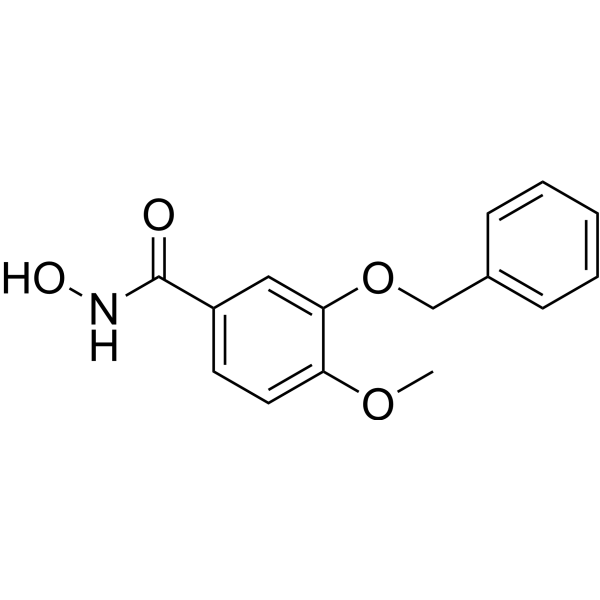
| DC11594 | HDAC8-IN-20a Featured |
HDAC8-IN-20a is a potent, selective HDAC8 inhibitor with IC50 of 27 nM.
More description
|
|
| DC76303 | ZSNI-21 |
ZSNI-21 is a dual inhibitor of ADAM17 and HDAC2. ZSNI-21 effectively inhibits the proliferation of Bel-7402 cells and demonstrates significant anti-metastatic capabilities against HCC-LM3 cells. ZSNI-21 is promising for research of hepatocellular carcinoma (HCC).
More description
|
|
| DC76302 | S234984 |
S234984 (Compound 13) is a molecular glue enhancer can specifically bind to KBTBD4 and HDAC2 to form a stable ternary complex. S234984 can be used for anti-cancer study.
More description
|
|
