To enhance service speed and avoid tariff delays, we've opened a US warehouse. All US orders ship directly from our US facility.
| Cat. No. | Product Name | Field of Application | Chemical Structure |
|---|---|---|---|
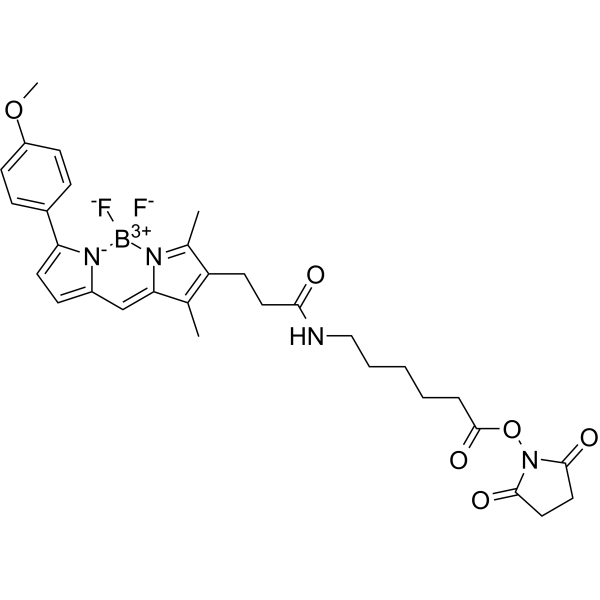
| DC68081 | BDY TMR-X, SE Featured |
BODIPY TMR-X SE is a potent fluorescent dye. BODIPY TMR-X SE can be used to label the primary amines (R-NH2) of proteins, amine-modified oligonucleotides, and other amine-containing molecules. BODIPY TR-X binds to protein or antibody and has bright, orange fluorescent light. (λex=544 nm, λem=570 nm).
More description
|
|
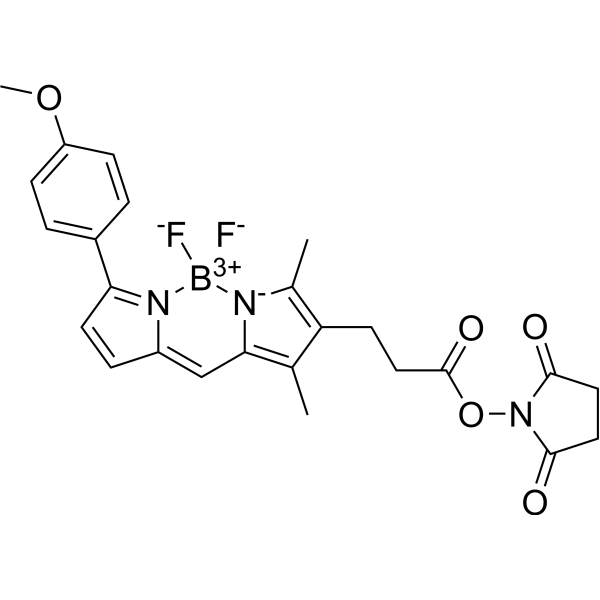
| DC33850 | BODIPY TMR NHS Ester Featured |
BDP TMR NHS ester is a multifunctional dye. Dyes are important tools in biological experiments. They can help researchers observe and analyze cell structures, track biomolecules, evaluate cell functions, distinguish cell types, detect biomolecules, study tissue pathology and monitor microorganisms. Their applications range from basic scientific research to clinical A wide range of diagnostics. Dyes are also widely used in traditional fields such as textile dyeing, as well as in emerging fields such as functional textile processing, food pigments and dye-sensitized solar cells.
More description
|
|
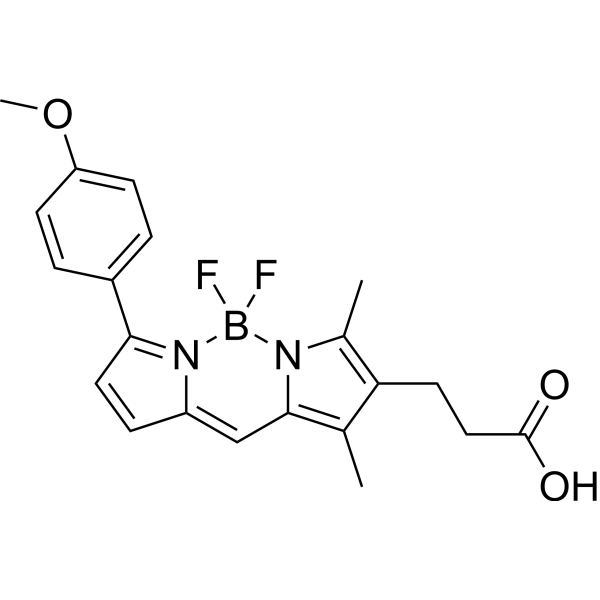
| DC33927 | BDP TMR carboxylic acid Featured |
BDP TMR carboxylic acid is a BDP TMR labeled carboxylic acid. BDP TMR carboxylic acid has the fluorophore BDP and can be used for oligonucleotide labeling and amino acid sequencing.
More description
|
|
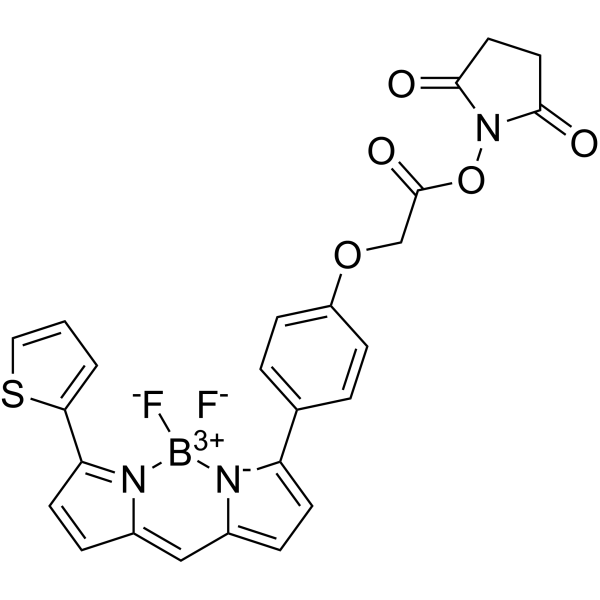
| DC33851 | Bdp tr nhs ester Featured |
Bdp tr nhs ester is a chemiluminescent coupling compound with a long excited state lifetime for immunoassays and is suitable for microscopy and fluorescence polarization analysis applications. NHS ester can react specifically and efficiently with the side chains of primary amines such as lysine residues or amino silane coated surfaces under neutral or weakly basic conditions to form covalent bonds.
More description
|
|
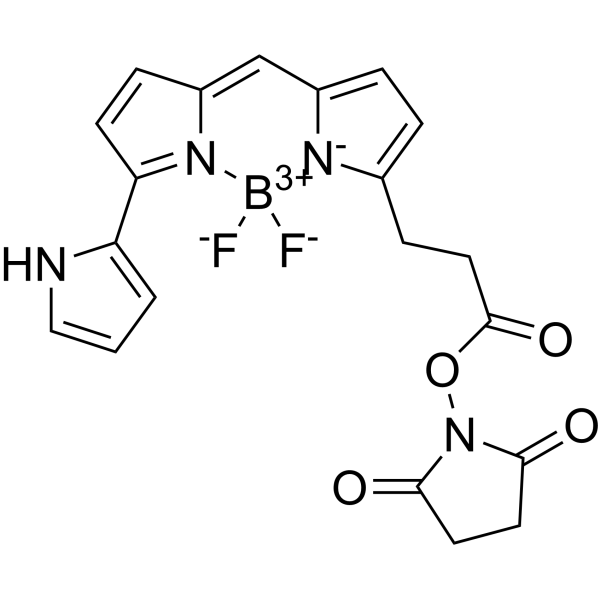
| DC68080 | Py-BODIPY-NHS ester Featured |
BODIPY dye is a small molecule dye with strong ultraviolet absorption ability, its fluorescence peak is relatively sharp, and the quantum yield is high. They are relatively insensitive to the polarity and pH of the environment and are relatively stable under different physiological conditions. Due to its structural asymmetry, BODIPY derives a variety of structural products.
More description
|
|
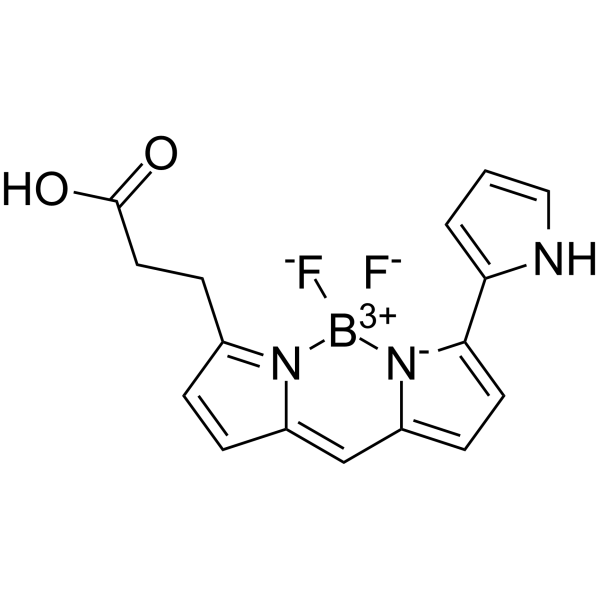
| DC68079 | BODIPY 576/589 Featured |
BODIPY 576/589 is a long wavelength biological labeled dye contains a free COOH-group (Em/Ex = 589/576 nm).
More description
|
|
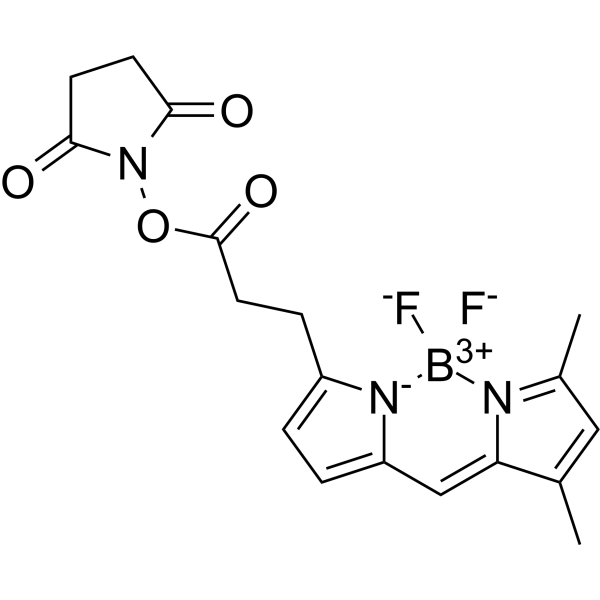
| DC33848 | BODIPY FL NHS ester Featured |
BODIPY FL NHS ester (BODIPY FL, SE) is a cell membranes-penatrable amine-reactive fluorescent probe. The maximum excitation/emission wavelength of the BODIPY-FL NHS ester are 502/511 nm, respectively. BODIPY-FL NHS ester has high stability and is insensitive to the polarity, pH and type of solvent, and can maintain stable fluorescence properties under different environmental conditions.
More description
|
|
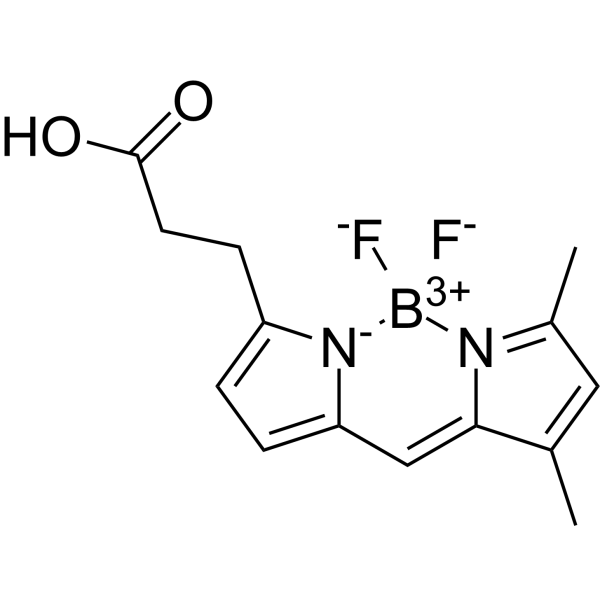
| DC36256 | BODIPY-FL Featured |
BODIPY-FL is a green fluorescent dye that can be used to label probes or primers. BODIPY-FL fluorescence can be quenched after interacting with uniquely positioned guanine, making it useful for quantifying specific DNA or RNA molecules.
More description
|
|
| DC67979 | ATO 532 Featured |
ATO 532 Acid has an identical molecular structure to ATTO 532 Acid. It is a fluorescent label related to the well - known dye Rhodamine 6G.
This dye is characterized by strong absorption, a high fluorescence quantum yield, excellent thermal and photostability, and good water solubility. Thanks to these features, ATO 532 is highly appropriate for single - molecule detection applications and high - resolution microscopy techniques, including Photoactivated Localization Microscopy (PALM), direct Stochastic Optical Reconstruction Microscopy (dSTORM), Structured Illumination Microscopy (SIM), and Stimulated Emission Depletion Microscopy (STED).
In addition, it is also very suitable for use in Fluorescence - Activated Cell Sorting (FACS) and Fluorescence In Situ Hybridization (FISH). The fluorescence of ATO 532 Acid can be most efficiently excited within the range of 515 - 545 nanometers.
More description
|

|
| DC67978 | ATO 488 Acid Featured |
ATO 488 has the same molecular structure as ATTO 488. It is a new type of hydrophilic fluorescent dye that offers excellent water - solubility, strong absorption capacity, a high fluorescence quantum yield, as well as outstanding thermal and photostability.
Due to these remarkable properties, ATO 488 is highly suitable for single - molecule detection applications and high - resolution microscopy techniques such as Structured Illumination Microscopy (SIM) and Stimulated Emission Depletion Microscopy (STED). Moreover, this dye is also well - suited for use in Fluorescence - Activated Cell Sorting (FACS) and Fluorescence In Situ Hybridization (FISH).
More description
|

|
| DC67977 | ATO 465 NHS Featured |
The ATO 465 molecule shares the same structure as ATTO 465. It is a fluorescent dye derived from the well - known acridone dye.
ATO 465 has moderate hydrophilicity. Its fluorescence can be effectively excited within the range of 420 - 465 nm. This dye has remarkable features such as strong absorption, a high fluorescence quantum yield, excellent thermal stability, and high photostability.
In an aqueous solution, this dye exhibits an astonishingly large Stokes shift of 55 nm. When it comes to a solid matrix, especially under low - temperature conditions, the dye emits intense and long - lasting phosphorescence.
More description
|

|
| DC67976 | ATO 425 NHS Featured |
ATTO 425 NHS ester is a new fluorescent marker based on the Rhodamine structure. It has strong absorption, high fluorescence quantum yield, high thermal stability and photochemical stability, and is suitable for single molecule detection and high-resolution microscopy. ATTO 425 NHS ester is an NHS ester derivative of ATTO 425 that can be used to label proteins or antibodies.
More description
|

|
| DC67975 | ATTO 425 Acid Featured |
The ATO 425 Acid molecule is equivalent to ATTO 425. It is a novel fluorescent marker with a coumarin structure. This marker boasts several notable characteristics, including a high fluorescence quantum yield, excellent photostability, and a relatively low molecular weight.
More description
|

|
| DC67974 | AF488 Cadaverine Featured |
AF 488 Cadaverine is a carbonyl - reactive structural unit. In the presence of activators like EDC or DCC, or activated esters such as NHS esters, it can be used to modify carboxyl groups through the formation of stable amide bonds. Additionally, it can serve as a polar tracer and an active dye for labeling proteins via carboxylic acid molecules.
More description
|

|
| DC67973 | AF 647 NHS Featured |
AF647-NHS ester is an analog of Alexa Fluor 647 (AF647). NHS ester can covalently bind to molecules with amino groups (such as proteins, antibodies, etc.). AF647 is a far-red fluorescent dye with an excitation wavelength (λex) of 635 nm (conventional fluorescence detection)/620 nm (instantaneous detection). Storage: Protect from light.
More description
|

|
| DC67972 | AF 568 Acid Featured |
AF 568 Acid shares the same chemical structure as Alexa Fluor 568 Acid. It is a bright red fluorescent dye that is optimally suited for use with the 568 - nanometer laser line. The AF 568 dye is soluble in water and is insensitive to pH values ranging from 4 to 10.
AF 568 Acid represents the most cost - effective amine - reactive form for conjugating the Alexa Fluor 568 fluorophore with polypeptides.
More description
|

|
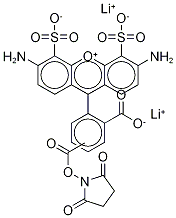
| DC41285 | TFAX 488,SE dilithium Featured |
TFAX 488,SE dilithium, an amine reactive green fluorescent dye, is insensitive to pH in the range 4-10. TFAX 488,SE dilithium forms bright and photostable conjugates with proteins and antibodies. TFAX 488,SE dilithium is suitable for use in flow cytometry, two-photon excitation microscopy (TPE), and super resolution microscopy techniques, such as dSTORM, SIM and STED. Excitation maximum=495 nm; emission maximum=515 nm; extinction coefficient=73,000 M-1cm-1; quantum yield=0.92.
More description
|
|
| DC67970 | Biotin-dT Featured |
Biotin - dT phosphoramidite contains a DMT (dimethoxytrityl) group, which enables quantitative coupling. It can be inserted into the target sequence as a substitute for the dT residue. This makes it an essential tool for adding biotin to the desired positions within an oligonucleotide sequence.
It complements the commonly used biotin phosphoramidite. The latter lacks the DMT group and can only be added to the 5' end of the oligonucleotide, thus bringing the synthesis process to an end.
More description
|

|
| DC67969 | Biotin TEG CE Phosphoramidite Featured |
Biotin TEG CE Phosphoramidite is a valuable reagent for attaching biotin to both the 3' - end and 5' - end of oligonucleotides. This phosphoramidite is equipped with a 15 - atom mixed - polarity extended spacer arm based on a triethylene glycol linker.
The extended spacer arm functions to physically separate the biotin moiety from the rest of the oligomer. This separation brings about several advantages that are particularly evident in practical applications. The distinct design of the spacer arm helps to optimize the performance of the biotin - labeled oligonucleotides, ensuring that the biotin's functionality is not compromised by the proximity of the oligomer structure.
More description
|

|
| DC67968 | Biotin CE Phosphoramidite Featured |
Biotin phosphoramidite stands as a vital instrument for incorporating biotin labels into oligonucleotide sequences, enabling the efficient labeling of oligonucleotides.
Biotin phosphoramidite features a spacer arm composed of 15 atoms. This spacer arm is designed to minimize potential hindrances associated with biotin binding. It complements the commonly used biotin phosphoramidite, which lacks the DMT group. The latter can only be added to the 5'- end of the oligonucleotide, and its addition effectively terminates the synthesis process.
More description
|

|
| DC67967 | 5'-Biotin CE Phosphoramidite Featured |
5'- Biotin phosphoramidite serves as a useful tool for incorporating biotin into oligonucleotides. However, it has a specific limitation in that it can only be added to the 5'- end of the oligonucleotide chain.
The DMTr (dimethoxytrityl) protecting group on the N1 position of biotin plays a crucial role during the coupling process. It effectively prevents the formation of branched structures, ensuring a more precise and controlled synthesis of the biotin - labeled oligonucleotides.
Biotin itself possesses sufficient hydrophobicity. This property allows for a relatively straightforward separation between biotin - labeled oligomers (in the DMT OFF state) and unlabeled oligomers. Nevertheless, the DMTr group still has its unique value. It can be utilized to facilitate the purification process when using reverse - phase cartridges and high - performance liquid chromatography (HPLC). This additional assistance from the DMTr group can lead to more efficient and accurate purification of the desired biotin - labeled oligonucleotides.
More description
|

|
| DC67966 | Digoxigenin Maleimide Featured |
Digoxigenin (DIG) is a small molecule with high antigenicity. Similar to other commonly used haptens like 2,4 - Dinitrophenol (DNP) and biotin, it can be applied in a variety of biological detection methods. Generally, Digoxigenin is conjugated with large biomolecules to be detected, such as proteins and nucleic acids. Anti - Digoxigenin antibodies are directly or indirectly labeled with fluorescent dyes or enzymes for visualization and detection purposes. Under mild conditions, Digoxigenin maleimide can easily react with thiol groups, enabling the attachment of Digoxigenin molecules to proteins or thiol - substituted oligonucleotides.
More description
|

|
| DC67965 | Digoxigenin NHS Featured |
Digoxigenin NHS is an activated ester which readily reacts with amino groups under mild conditions, attaching the Digoxigenin (HY-B1025) moiety to proteins or amino-. Digoxigenin NHS ester can be used to label proteins and oligonucleotides.
More description
|

|
| DC67964 | HCQ-3 Acid Featured |
BHQ is a genuine dark quencher. Thanks to its polycyclic azo backbone, it has no natural emission. These quenchers can be paired with all common dyes to construct highly efficient quenching qPCR probes.
More description
|

|
| DC67963 | HCQ-2 Acid Featured |

|
|
| DC67962 | HCQ-1 Acid Featured |
HCQ - 1 is equivalent to BHQ - 1. It can be positioned either at the end or within the oligonucleotide. Oligonucleotides labeled with BHQ - 1 have a wide range of applications, one of which is as dual - labeled fluorescent probes in real - time PCR. Regarding the synthesis and modification of BHQ - 1 quenched oligonucleotides, you can refer to the service link of biosynthesis.
More description
|

|
| DC67961 | Cyanine 5 Acid Featured |
Cyanine 5 Acid serves as an analog of the free carboxylic acid form of Cy5 and contains the Cyanine5 fluorophore. This particular dye has limited water - solubility. However, to obtain a solution material with an effective concentration, it can be dissolved in a mixture of water and organic phases such as DMF, DMSO, and alcohols.
More description
|

|
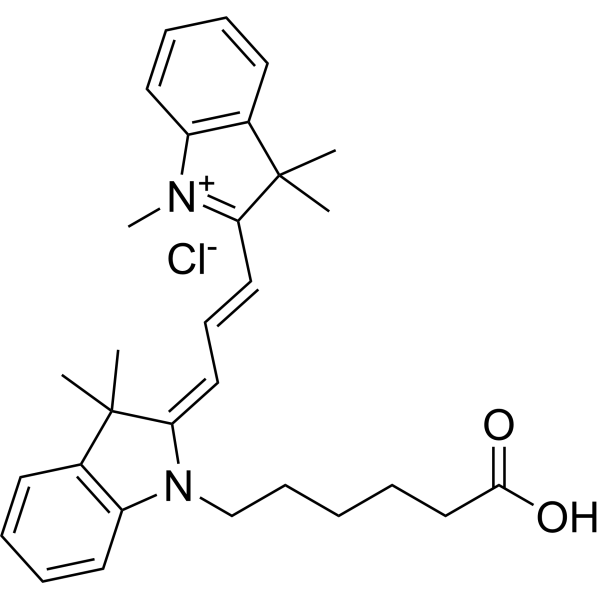
| DC67960 | Cyanine 3 Acid Featured |
Cyanine 3 Acid is a non-toxic red fluorescent dye with good solubility in organic solvents. Cyanine3 carboxylic acid chloride can be used as a non-reactive fluorophore for experimental control and calibration. Cyanine3 carboxylic acid chloride can also be synthesized with targeted agents as fluorescent probes for rapid detection of agent reactions.
More description
|
|
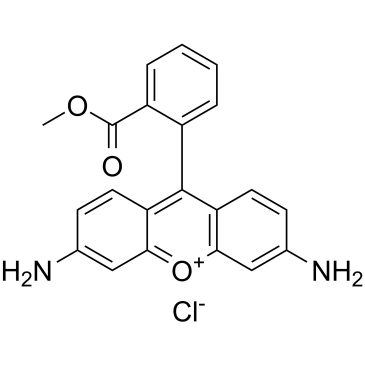
| DC32450 | Rhodamine 123 Featured |
Rhodamine 123 is a chemical compound and a dye.
More description
|
|
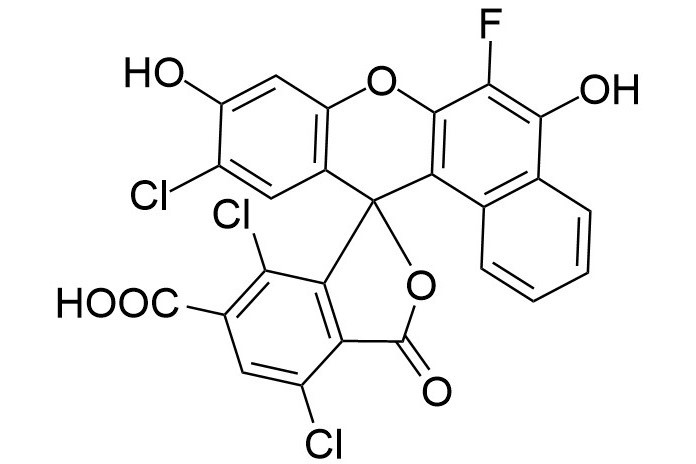
| DC67958 | 6-NED Acid Featured |
|