To enhance service speed and avoid tariff delays, we've opened a US warehouse. All US orders ship directly from our US facility.
| Cat. No. | Product Name | Field of Application | Chemical Structure |
|---|---|---|---|
| DC76189 | KWR137 |
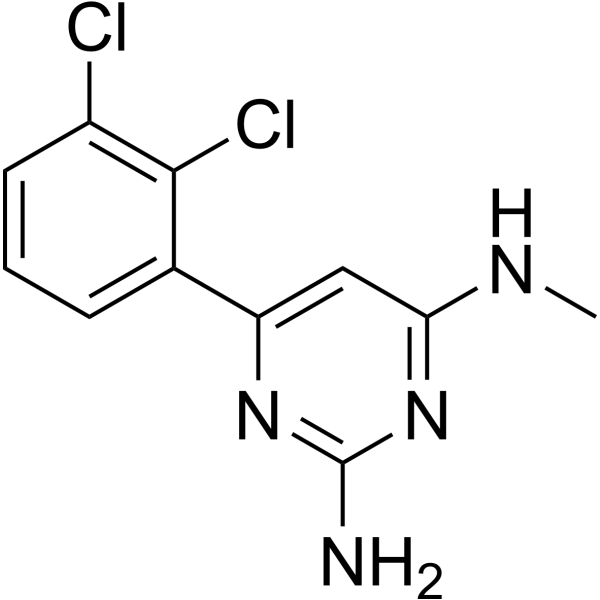
KWR137 is a WRN degrader, with an IC50 of 8 nM. KWR137 exhibits good anti-proliferative activity against MSI-H cells, with a GI50 of 509 nM in SW48 cells and a GI50 of 824 μM in HCT116 cells. It also demonstrates anti-tumor growth effects in xenograft mouse models. KWR137 can be used for cancer research.
More description
|

|
| DC76188 | KWR095 |
KWR095 is an orally active WRN inhibitor with an IC50 of 0.032 μM for WRN ATPase. KWR095 can impede the duplex unwinding activity of WRN and inhibit the proliferation of tumor cells. KWR095 has anti-tumor activity.
More description
|
|
| DC76187 | KC12 |
KC12 is an inhibitor for FOXM1 transcription factor. KC12 exhibits cytotoxicity in cancer cell MDA-MB-231 with an IC50 of 6.13 µM.
More description
|
|
| DC76186 | IDB-001 |
IDB-001 is an inhibitor of ribosome PTC that inhibits protein synthesis in a sequence-selective manner. IDB-001 inhibits HCC-1143 with EC50 value of 0.84 μM. IDB-001 inhibits MYC-dependent cancer cell viability.
More description
|
|
| DC76185 | HPH-15 |
HPH-15 is an anti-migration compound that inhibits cell migration by binding to hnRNP U or suppressing TGF-β signaling. In addition, HPH-15 can also inhibit epithelial-mesenchymal transition (EMT). HPH-15 holds promise for research in the fields of anti-tumor metastasis and anti-fibrosis.
More description
|
|
| DC76184 | HNC-1664 |
HNC-1664 is the orally active inhibitor for RNA-dependent RNA polymerase (RdRP). HNC-1664 exhibits broad-spectrum antiviral activity against coronavirus (SARS-CoV-2 wildtype and its mutants XBB.1.18, HK.3.1, BF.7.14, BA.1HCoV-229E, HCoV-OC43) and arenavirus. HNC-1664 exhibits anti-infectious activity in SARS-CoV-2 Delta infected mouse models.
More description
|
|
| DC76183 | GSK4418959 |
GSK4418959 (IDE275) is a non-covalent, reversible, selective and orally active WRN helicase inhibitor. GSK4418959 inhibits ATPase and DNA unwinding functions in an ATP-competitive manner. GSK4418959 can be used for the study of microsatellite instability-high (MSI-H) cancer.
More description
|
|
| DC76182 | ddATP tetrasodium |
ddATP (2',3'-Dideoxyadenosine 5'-triphosphate) tetrasodium is an active metabolite of 2',3'-dideoxyadenosine and an inhibitor of chain elongation by DNA polymerase (DNA polymerase). ddATP tetrasodium can be used in Sanger sequencing and research related to viral infections.
More description
|
|
| DC76181 | Clofarabine-5'-triphosphate |
Clofarabine-5'-triphosphate is the metabolite of Clofarabine by deoxycytidine kinase (dCK) phosphorylation. Clofarabine-5'-triphosphate exhibits cytotoxicity in cancer cells through inhibition of DNA synthesis and DNA repair.
More description
|
|
| DC76180 | Clofarabine-5'-diphosphate trisodium |
Clofarabine-5'-diphosphate trisodium (Clofarabine-DP trisodium) is the trisodium salt form of Clofarabine-5'-diphosphate. Clofarabine-5'-diphosphate trisodium is the metabolite of ClofarabineA0005) by deoxycytidine kinase (dCK) phosphorylation. Clofarabine-5'-diphosphate trisodium can be further phorphorylated into Clofarabine-5'-triphosphate, and exhibits cytotoxicity in cancer cells through inhibition of DNA synthesis and DNA repair.
More description
|
|
| DC76179 | Clofarabine-5'-diphosphate |
Clofarabine-5'-diphosphate (Clofarabine-DP) is the metabolite of Clofarabine by deoxycytidine kinase (dCK) phosphorylation. Clofarabine-5'-diphosphate can be further phorphorylated into Clofarabine-5'-triphosphate, and exhibits cytotoxicity in cancer cells through inhibition of DNA synthesis and DNA repair.
More description
|
|
| DC76178 | Ap4dT |
Ap4dT is an inhibitor for human adenylate kinase isozyme 1 (hAK1), that inhibits the ATP and ADP synthesis with IC50s of 42 μM and 38 μM.
More description
|
|
| DC76177 | AHL-Pu-2 |
AHL-Pu-2 is the clickable electrophilic purine. AHL-Pu-2 can be used to directly quantify protein-RNA interactions on proteins through photoaffinity competition with 4-thiouridine (4SU)-labeled RNA in cells.
More description
|
|
| DC76176 | Adenosyl-(3′→5′)-uridine |
Adenosyl-(3′→5′)-uridine (ApU) is a nucleotide, which is composed of an adenine base and a uracil sugar molecule through a 3'-5' phosphodiester bond. Adenosyl-(3′→5′)-uridine (ApU) participates in the biological processes, such as gene expression regulation, signal transduction, and protein synthesis.
More description
|
|
| DC76175 | 2'-(2-Nitrobenzyl)-ATP |
2'-(2-Nitrobenzyl)-ATP is an rATP analog. 2'-(2-Nitrobenzyl)-ATP acts as a transcription terminator, inhibiting further RNA chain elongation by T7 RNA polymerase.
More description
|
|
| DC7725 | TH 287 Featured |
TH 287 is a first-in-class MTH1 inhibitor (IC50 value 5.0 nM) that selectively and effectively kills U2OS and other cancer cell lines, with considerably less toxicity towards several primary or immortalized cells.
More description
|
|
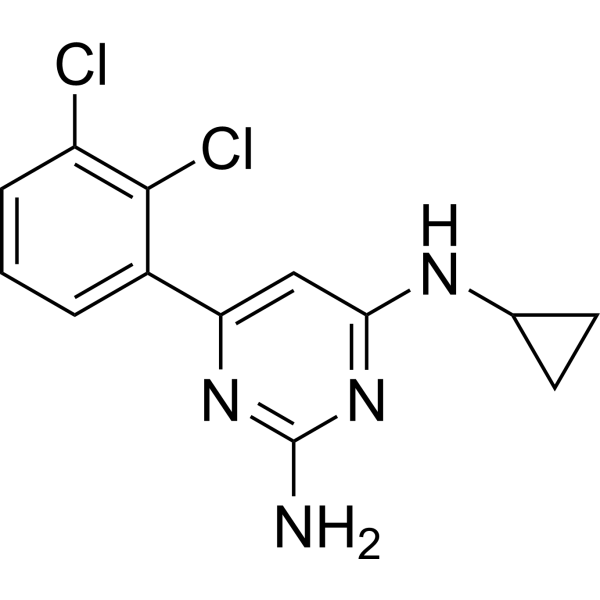
| DC7726 | TH 588 Featured |
TH588 represents a highly selective and cell-permeable small molecule inhibitor targeting MTH1 (NUDT1), a member of the nudix hydrolase family, with potent inhibitory activity (IC₅₀ ≈5 nM).
More description
|
|
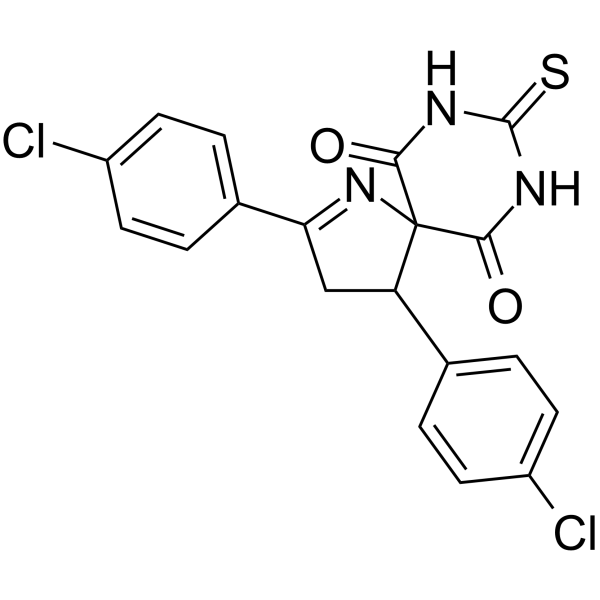
| DC45555 | SCR130 Featured |
SCR130 is a novel DNA repair inhibitor with IC50s of 14 μM in Reh cells and 2 μM in Nalm6 cells. SCR130 specifically inhibits DNA Ligase IV‐mediated joining with minimal or no effect on Ligase III and Ligase I mediated joining.
More description
|
|
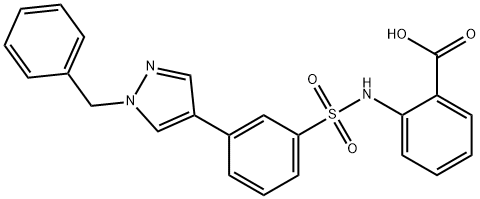
| DC43969 | NITD-2 Featured |
NITD-2, a dengue virus (DENV) polymerase inhibitor, inhibits the DENV RdRp-mediated RNA elongation. NITD-2 penetrates cell membrane poorly.
More description
|
|
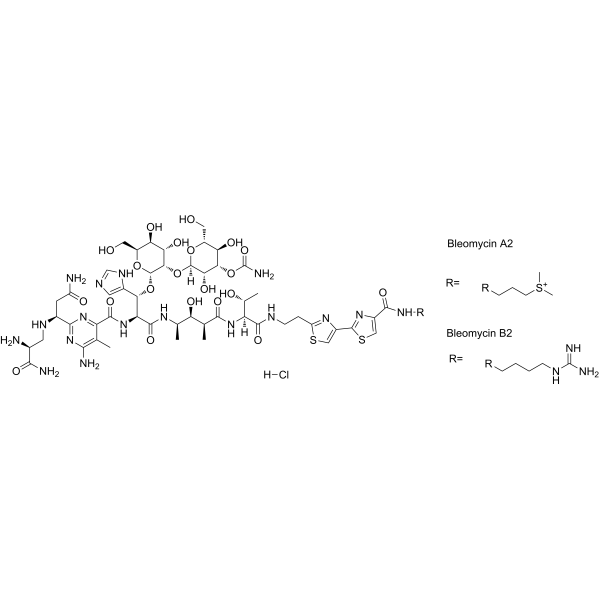
| DC41098 | Bleomycin hydrochloride Featured |
Bleomycin hydrochloride is a DNA synthesis inhibitor. Bleomycin hydrochloride is a DNA damaging agent. Bleomycin hydrochloride is an antitumor antibiotic.
More description
|
|
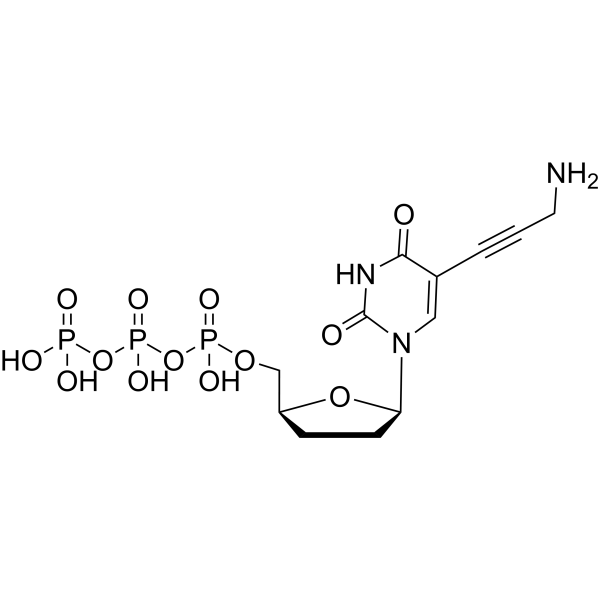
| DC44137 | 5-Propargylamino-ddUTP Featured |
5-Propargylamino-ddUTP, a nucleoside molecule that can be used to synthesis of cyanine dye-nucleotide conjugate which is used in nucleic acid labeling or sequence analysis.
More description
|
|
| DC74625 | Votoplam |
Votoplam is a gene splicing modulator, used to inhibit Huntington's disease.
More description
|
|
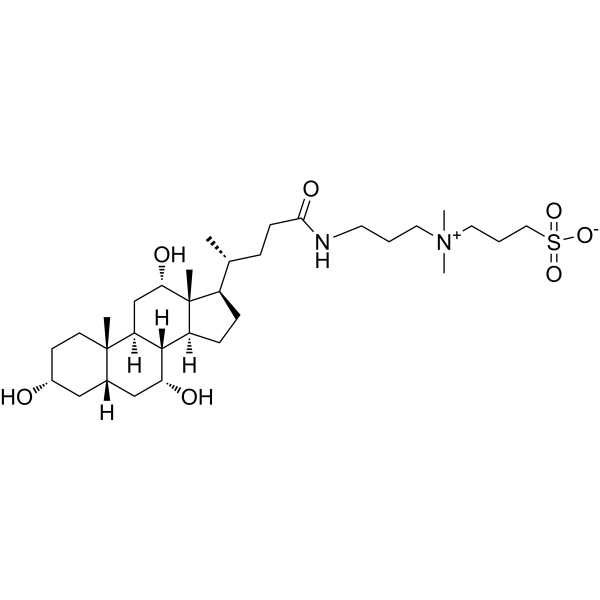
| DC44851 | CHAPS Featured |
CHAPS is a zwitterionic surfactant that decreases the sequence specificity of the nucleosome.,nucleosome [1]()
More description
|
|
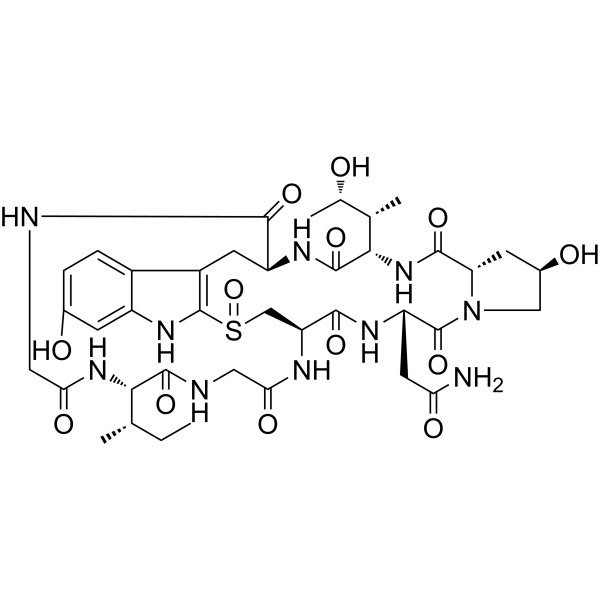
| DC40472 | γ-Amanitin Featured |
γ-Amanitin an ADC cytotoxin and isolated from the?mushroom. γ-Amanitin inhibits?RNA polymerase II and disrupts synthesis of?mRNA. γ-Amanitin shows similar effects to α-Amanitin and β-Amanitin .
More description
|
|
| DC39082 | BCH001 Featured |
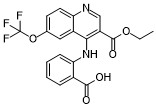
BCH001 is a specific PAPD5 inhibitor that restores telomerase activity and telomere length in dyskeratosis congenita (DC) patient induced pluripotent stem cells. PAPD5 is a noncanonical poly(A) polymerase with an unusual RNA-binding motif.
More description
|
|
| DC72169 | RP-6685 Featured |
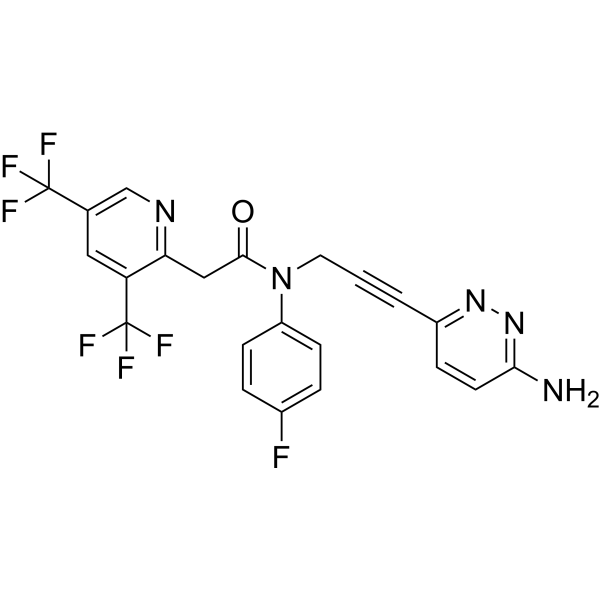
RP-6685 is a potent, selective and orally active DNA polymerase theta (Polθ) inhibitor with an IC50 value of 5.8 nM (PicoGreen assay). RP-6685 shows antitumor efficacy in mouse tumor xenograft model.
More description
|
|
| DC72861 | Diethyl Pyrocarbonate |
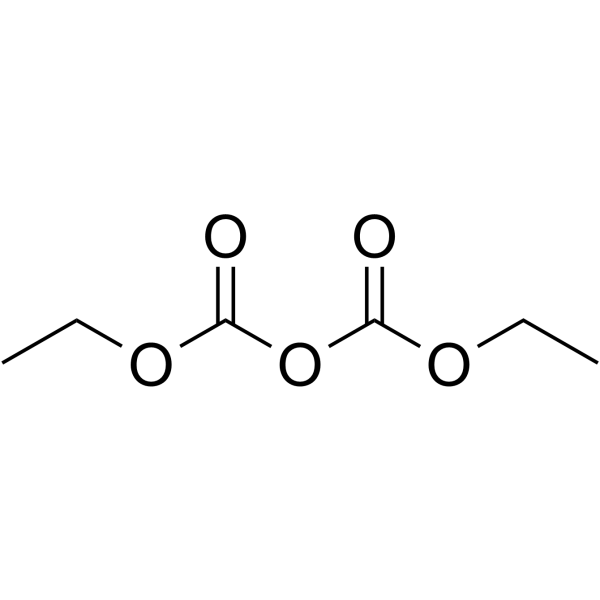
Diethyl pyrocarbonate is a potent, non-specific inhibitor of RNase. It has been useful as an in vitro agent, relatively specific for binding to imidazole of histidine. It inhibits central chemosensitivity in rabbit and can modify Ser, Thr, His and Tyr residues.
More description
|
|
| DC71735 | PCLX-001 Featured |
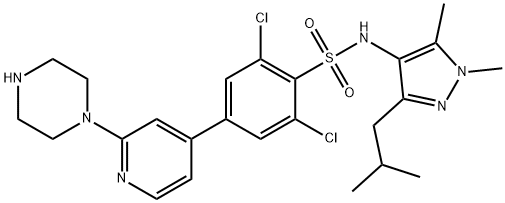
PCLX-001 is an orally acitve, small-molecule, dual N-myristoyltransferase (NMT) inhibitor, with IC50s of 5 nM (NMT1) and 8 nM (NMT2), respectively.
More description
|
|
| DC72589 | ZIM |
ZIM, a norbornene derived from 4-Aminoantipyrine, is a potent inducer of DNA damage, causing genomic and chromosomal damage as well as inducing cell death and activating phagocytosis. ZIM has chemotherapeutic potential for use in cancer research.
More description
|
|
| DC4197 | Actinomycin D Featured |
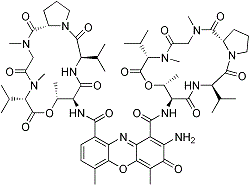
Dactinomycin (also known generically as Actinomycin D ) is the most significant member of actinomycines, which are a class of polypeptide antibiotics isolated from soil bacteria of the genus Streptomyces.
More description
|
|