To enhance service speed and avoid tariff delays, we've opened a US warehouse. All US orders ship directly from our US facility.
| Cat. No. | Product Name | Field of Application | Chemical Structure |
|---|---|---|---|
| DC22472 | Naltrexone Featured |
A potent, competitive antagonist for μ, κ, δ, and σ-opioid receptors with Ki of 0.0825 nM, 0.509 nM, and 8.02 nM, for MOR, KOR, and DOR, respectively.
More description
|

|
| DC60349 | UDP-b-L-arabinopyranose Featured |

|
|
| DC49271 | BIM-26226 Featured |
BIM-26226, gastrin-releasing peptide, is a potent and selective antagonist of bombesin receptor. BIM-26226 inhibits BN- or GRP-stimulated amylase release with IC50s in the nanomolar range. BIM-26226 can be used for the research of cancer.
More description
|
.gif)
|
| DC46131 | Acid-C3-SSPy Featured |
Acid-C3-SSPy is a cleavable DBA-DM4 linker used in the synthesis of DBA-DM4, a drug-linker conjugate for ADC.
More description
|

|
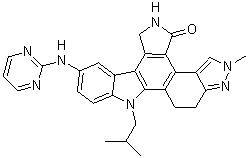
| DC22812 | CEP-11981 |
CEP-11981 is a potent, multi-targeted, orally active, pan-VEGFR, TIE-2 and FGFR1 inhibitor with IC50 of 3-100 nM.
More description
|
|
| DC39821 | Finasteride Carboxaldehyde Featured |
Finasteride Carboxaldehyde is a metabolite of Finasteride in human bile (M2 metabolite).
More description
|
.png)
|
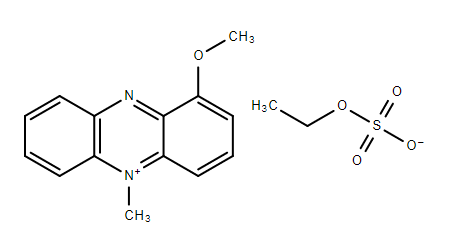
| DC65830 | 1-M-PES(1-Methoxy-5-methylphenazinium ethyl sulfate) Featured |
1-m-PES is an electron mediator which has higher stability of solutions than 1-Methoxy PMS. The stability in neutral to alkali conditions has been extremely improved with 1-Methoxy PES. 1-M-PES is a stable small-molecular compound and it has an equal or higher thermal stability than diaphorase. The 1-Methoxy PES solution can be stored long term.
More description
|
|
| DC65047 | Morpholine, 4-[2-(2-bromo-4-nitrophenoxy)ethyl]- Featured |
.png)
|
|
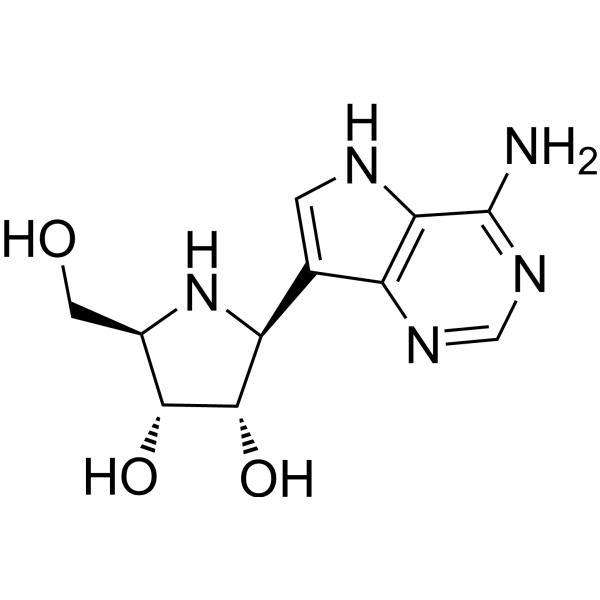
| DC25095 | BCX4430 freebase |
A viral RNA-dependent RNA polymerase (RdRp) inhibitor that acts as a non-obligate RNA chain terminator.
More description
|
|
| DC9624 | Sparteine sulfate pentahydrate Featured |
(-)-Sparteine sulfate pentahydrate is a class 1a antiarrhythmic agent and a sodium channel blocker.
More description
|
.png)
|
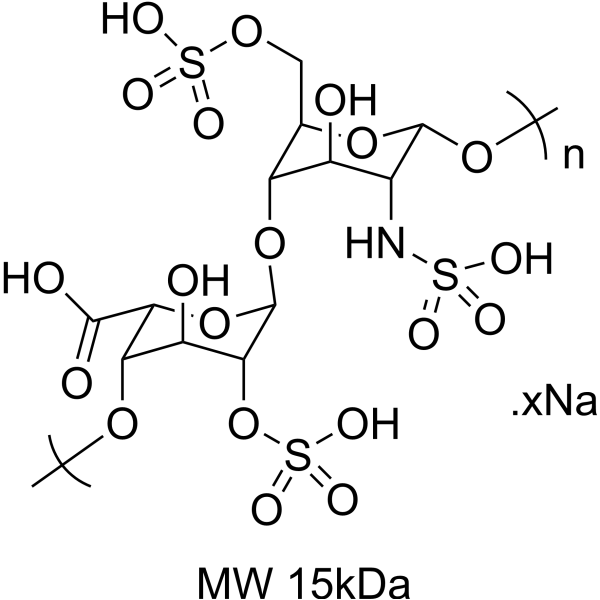
| DC28998 | Heparin sodium salt (MW 15kDa) Featured |
Heparin sodium salt (MW 15kDa) (Sodium heparin (MW 15kDa)) is a polymer of Heparin with the molecular weight of 15kDa. Heparin sodium salt is an anticoagulant which binds reversibly to antithrombin III (ATIII) and greatly accelerates the rate at which ATIII inactivates coagulation enzymes thrombin factor IIa and factor Xa.
More description
|
|
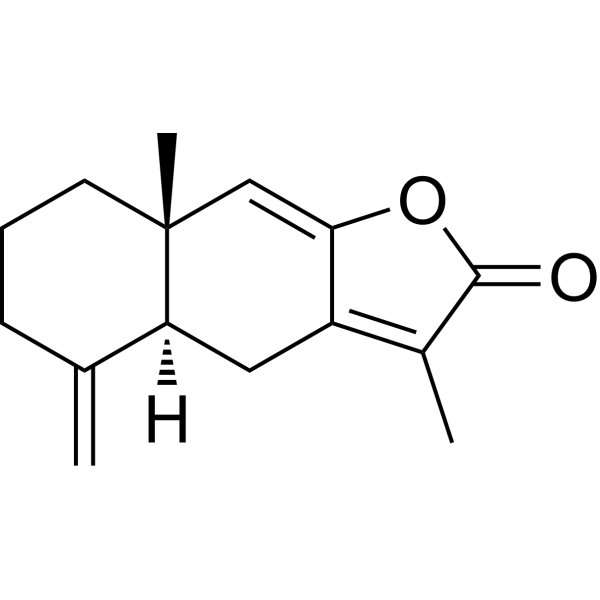
| DC22287 | Atractylenolide I Featured |
Atractylenolide I is a sesquiterpene derived from the rhizome of Atractylodes macrocephala, possesses diverse bioactivities, such as neuroprotective, anti-allergic, anti-inflammatory and anticancer properties. Atractylenolide I reduces protein levels of phosphorylated JAK2 and STAT3 in A375 cells, and acts as a TLR4-antagonizing agent.
More description
|
|
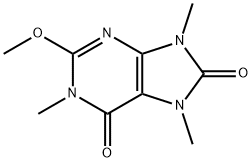
| DC65828 | Methylliberine Featured |
|
|
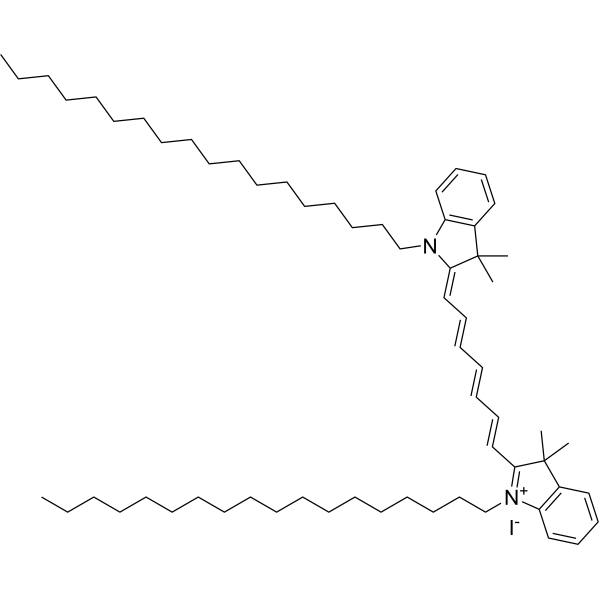
| DC65827 | DiR Featured |
DiR is a long-chain carbocyanine dye. Carbocyanine dyes are widely used as Di to label cells, organelles, liposomes, viruses and lipoproteins.
More description
|
|
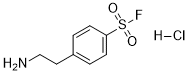
| DC7703 | AEBSF-hydrochloride Featured |
AEBSF HCl is a broad spectrum, irreversible serine protease inhibitor.
More description
|
|
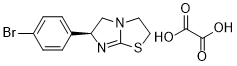
| DC33565 | L-p-Bromotetramisole oxalate Featured |
L-p-Bromotetramisole is a cell-permeable inhibitor of all four human AP isoenzymes (Kis =18 and 56 μM for PLAP and NSAP, respectively).
More description
|
|
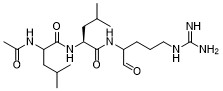
| DC38000 | Leupeptin Featured |
Leupeptin is a protease inhibitor, will strongly inhibit Trypsin, Papain, Plasmin, Thrombokinase, Kallikrein and Cathepsin B. The half-maximal inhibitory concentration ranges from 0.5 to 75 μg/ml, depending on the enzyme and the substrate. Leupeptin does not inhibit Chymotrypsin, Elastase, Renin, or Pepsin.
More description
|
|
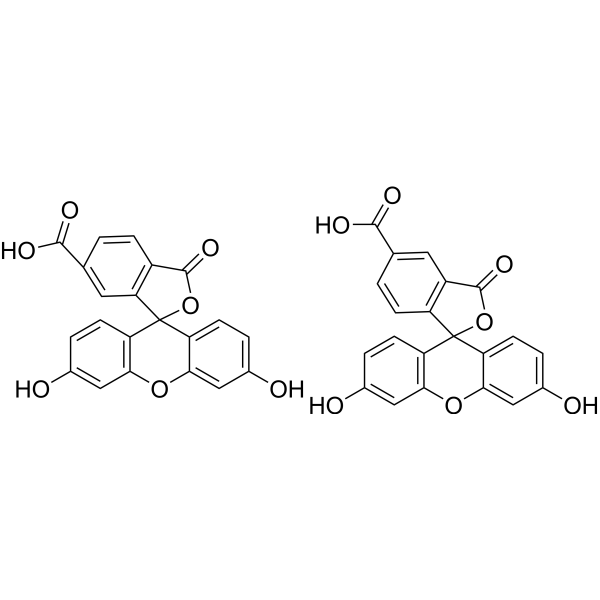
| DC65825 | 5(6)-Carboxyfluorescein Featured |
5(6)-Carboxyfluorescein (5(6)-FAM) is an amine-reactive pH-sensitive green fluorescent probe. 5(6)-Carboxyfluorescein (5(6)-FAM) can be used to label proteins, peptides and nucleotides. 5(6)-Carboxyfluorescein can be used for the detection of tumour areas in vivo.
More description
|
|
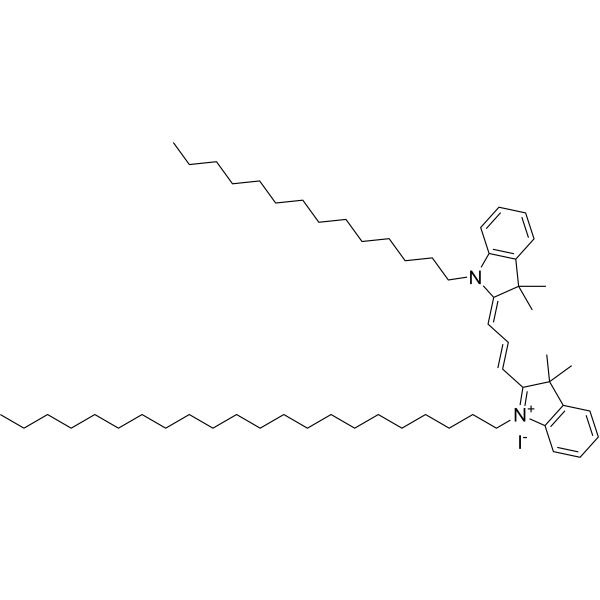
| DC65824 | PKH 26 Featured |
PKH 26 is a red fluorescent dye, PKH 26 can stably bind to the lipid region of cell membrane and emit red fluorescence (Ex/Em=551/567 nm), which is mainly used for in vitro cell labeling, in vitro cell proliferation studies and in vivo and in vitro cell tracing studies.
More description
|
|
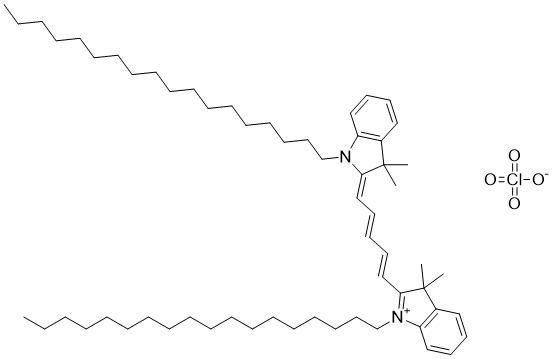
| DCC1779 | Did Perchlorate Featured |
Lipophilic fluorescent reagent, labeling membranes and other hydrophobic structures
More description
|
|
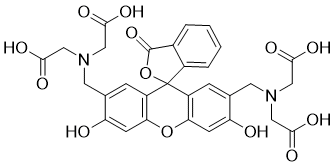
| DC34180 | Calcein Featured |
Calcein is a fluorescent dye that is useful for testing cell viability and for short-term labeling of cells.
More description
|
|
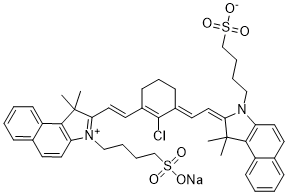
| DC65823 | IR-820(New Indocyanine Green) Featured |
IR-820 is a near infrared dye with its excellent fluorescence penetration, good color rendering and better stability. IR-820 is an infrared blood pool contrast agent to detect and quantify diseased tissue in live animals. IR-820 has maximal excitation and emission wavelengths of 710 and 820 nm, respectively. IR-820 emission is significantly improved in vivo on serum binding to albumin, and elimination occurs predominantly via the gastrointestinal tract. Note: this product has ~80% dye.
More description
|
|
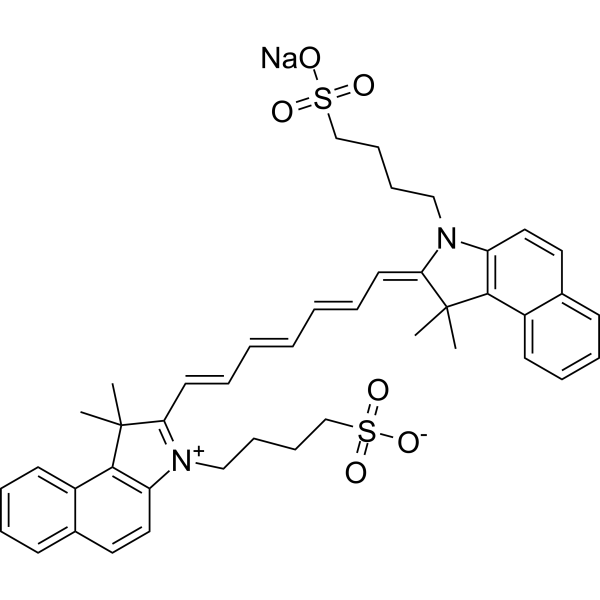
| DC32165 | Indocyanine Green Featured |
Indocyanine Green, also known as Cardio-Green and Fox, is a tricarbocyanine dye that is used diagnostically in liver function tests and to determine blood volume and cardiac output.
More description
|
|
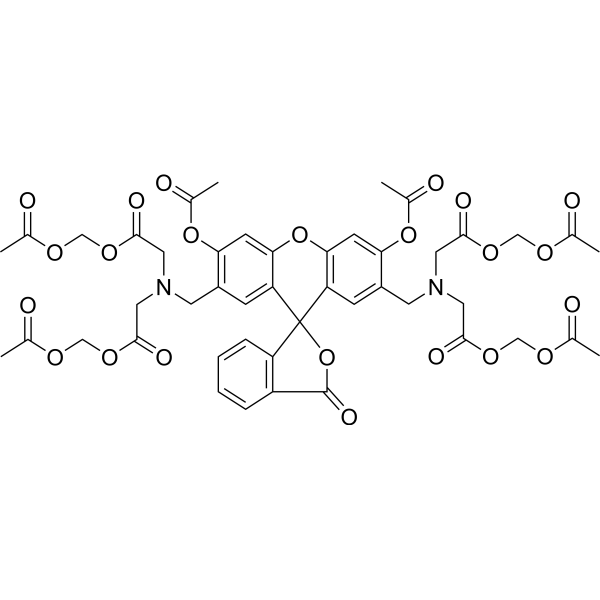
| DCC1203 | Calcein-am Featured |
Cell permeable derivative of calcein, becoming fluorescent on hydrolysis
More description
|
|
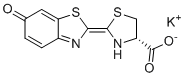
| DC11486 | D-Luciferin (potassium salt) Featured |
D-Luciferin is a chemiluminescent substrate of firefly luciferase.
More description
|
|
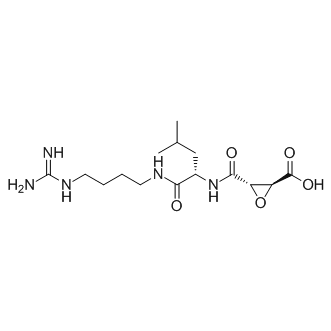
| DC9387 | E-64 Featured |
E-64 is a natural, potent, and irreversible inhibitor of cysteine proteases; IC50 values for inhibiting cathepsins K, S, and L, in vitro, are 1.4, 4.1, and 2.5 nM, respectively.
More description
|
|
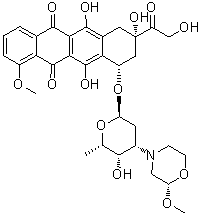
| DC31255 | Nemorubicin Featured |
Nemorubicin, also known as PNU152243A, is a doxorubicin derivative that differs significantly from its parent drug in terms of spectrum of antitumor activity, metabolism and toxicity profile. The drug is active on tumors resistant to alkylating agents, topoisomerase II inhibitors and platinum derivatives. It works primarily through topoisomerase I inhibition. Of note, Nemorubicin is active in cells with upregulation of the nucleotide excision repair (NER) pathway, where current therapies fail. Nemorubicin is biotransformed in the liver into cytotoxic metabolites that may further contribute to render this drug highly active against primary liver tumors or liver metastases.
More description
|
|
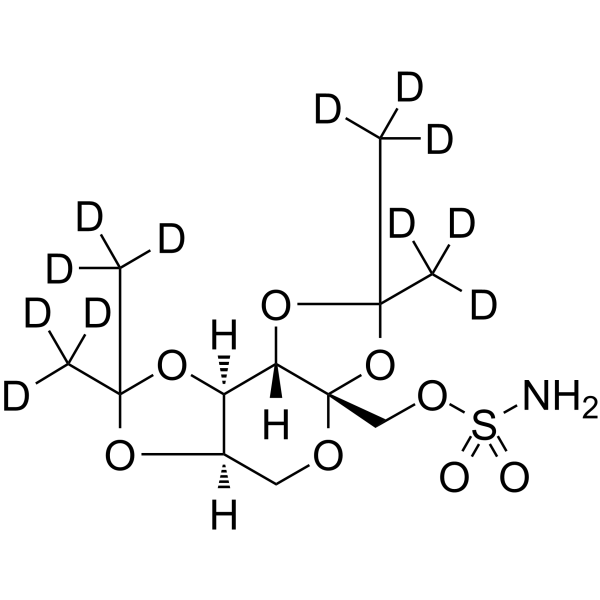
| DC28270 | Topiramate D12 Featured |
Topiramate D12 (McN 4853 D12) is a deuterium labeled Topiramate. Topiramate is a broad-spectrum antiepileptic agent. Topiramate is a GluR5 receptor antagonist. Topiramate produces its antiepileptic effects through enhancement of GABAergic activity, inhibition of kainate/AMPA receptors, inhibition of voltage-sensitive sodium and calcium channels, increases in potassium conductance, and inhibition of carbonic anhydrase.
More description
|
|
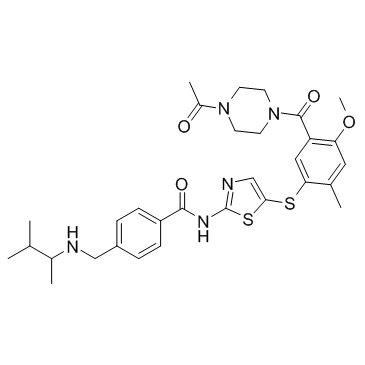
| DC70102 | ITK inhibitor Featured |
ITK inhibitor (CAS 439574-61-5 ) is a Interleukin-2-inducible T-cell kinase (Itk) inhibitor..
More description
|
|
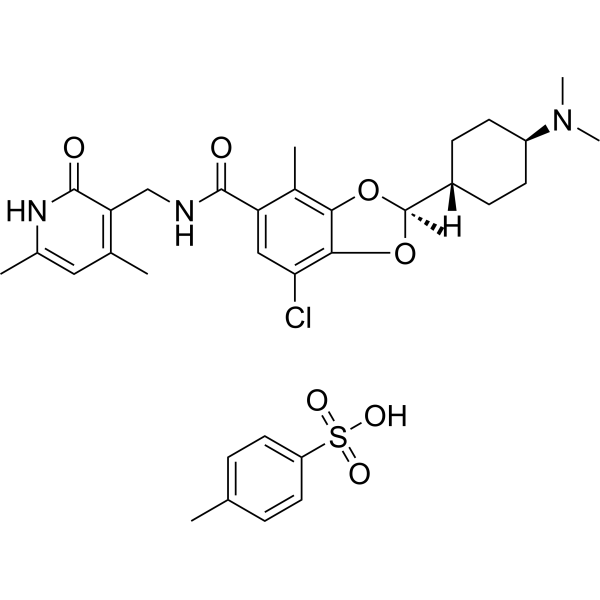
| DC65822 | Valemetostat tosylate Featured |
Valemetostat (DS-3201) tosylate, a first-in-class EZH1/2 dual inhibitor with IC50 values <10 nM. Valemetostat tosylate can be used for the research of relapsed/refractory peripheral T-cell lymphoma.
More description
|
|