To enhance service speed and avoid tariff delays, we've opened a US warehouse. All US orders ship directly from our US facility.
| Cat. No. | Product Name | Field of Application | Chemical Structure |
|---|---|---|---|
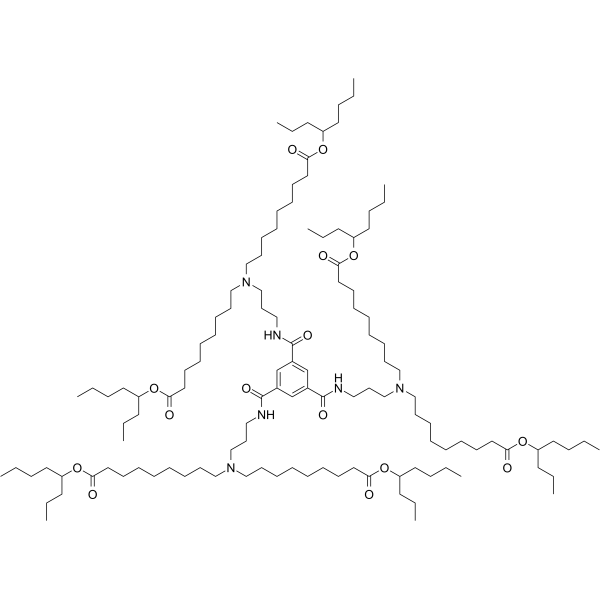
| DC49932 | FTT5 Featured |
FTT5 is a lipid-like compound for efficient delivery of long mRNAs in vivo.
More description
|
|
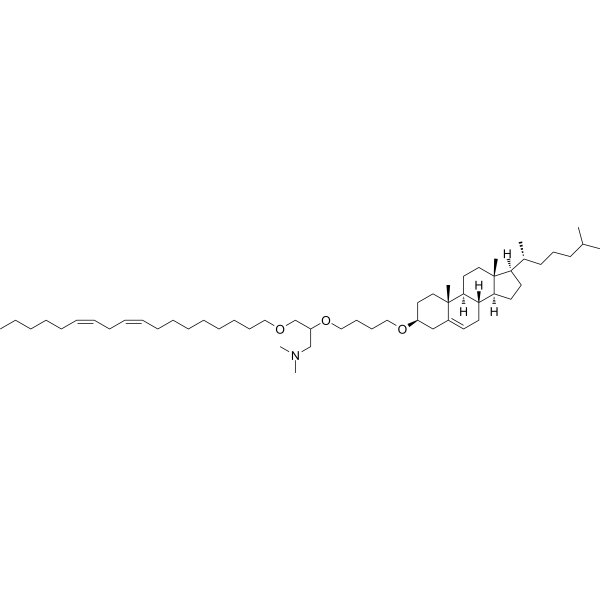
| DC70008 | CLinDMA |
CLinDMA, a cationic lipid known to potentially trigger inflammatory responses, is utilized in the synthesis of LNP201. This liposome-based assembly is specifically designed for the systemic delivery of siRNA.
More description
|
|
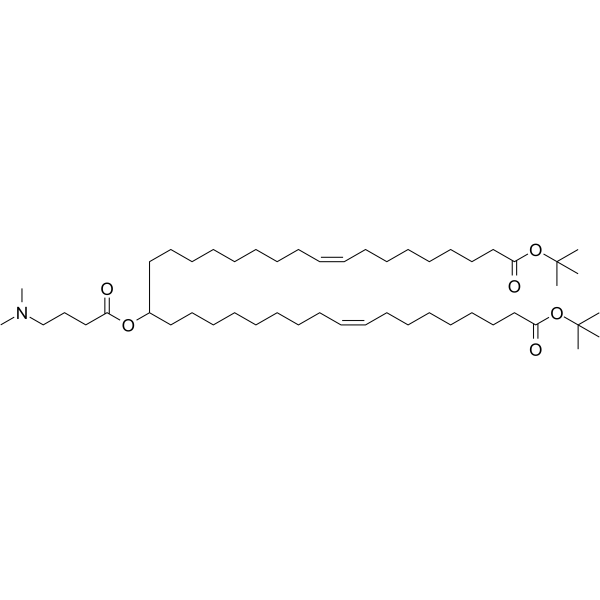
| DC49883 | L343 |
L-343 is an ionizable cationic lipidoid and can be used to synthetic liposomes for systemic delivery of RNAi therapeutics, Pka: 6.34.L343, with its sterically hindered tert-butyl esters, exhibited slower elimination from plasma and higher and more persistent levels in liver compared with L319.
More description
|
|
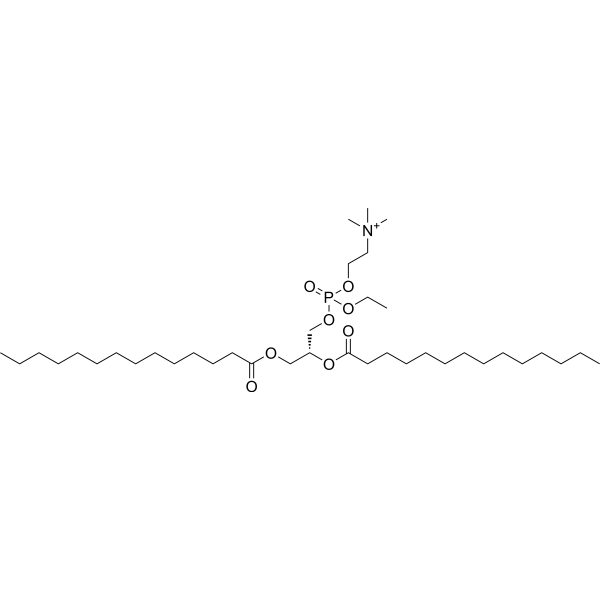
| DC71034 | EDMPC |
EDMPC, a cationic lipid, has an enhanced ability to deliver DNA to pulmonary tissues. EDMPC mediates intralobar DNA delivery to rodents.
More description
|
|
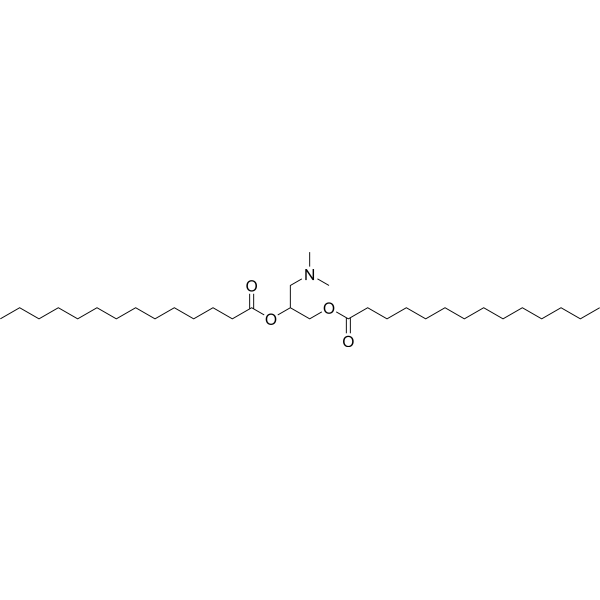
| DC70989 | 14:0 DAP |
14:0 DAP (1,2-dimyristoyl-3-dimethylammonium-propane ) is a cationic lipid that can be used for drug delivery.
More description
|
|
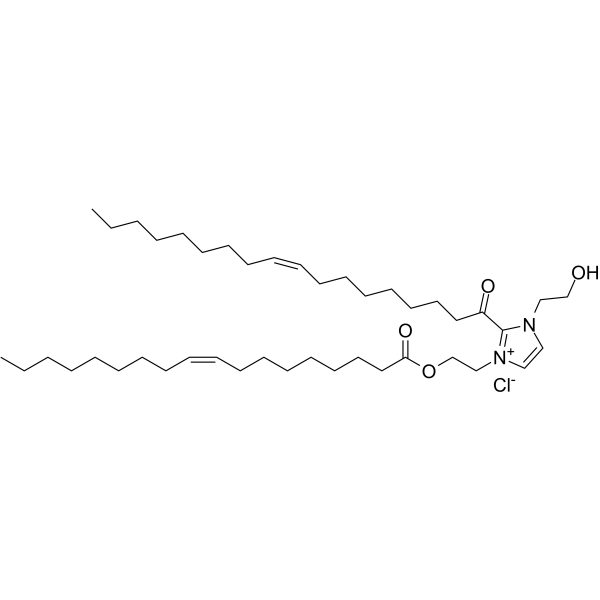
| DC71699 | DOIC |
DOIC is a cationic lipid that can be used for RNA vaccines.
More description
|
|
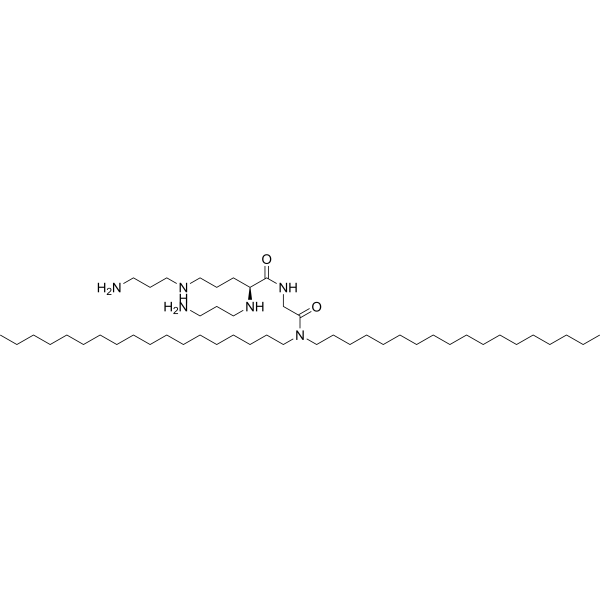
| DC71129 | Transfectam |
Transfectam is a cationic lipid able to interact with DNA to form complexes that mediate efficient gene transfer into various eukaryotic cells.
More description
|
|
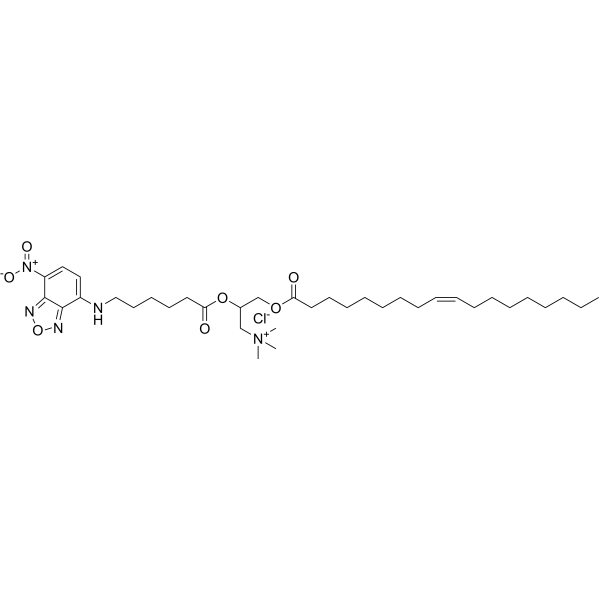
| DC71044 | Fluorescent DOTAP |
Fluorescent DOTAP, a cationic lipid, can be used for the research of nucleic acid and protein delivery.
More description
|
|
| DC80069 | OF-DEG-LIN |
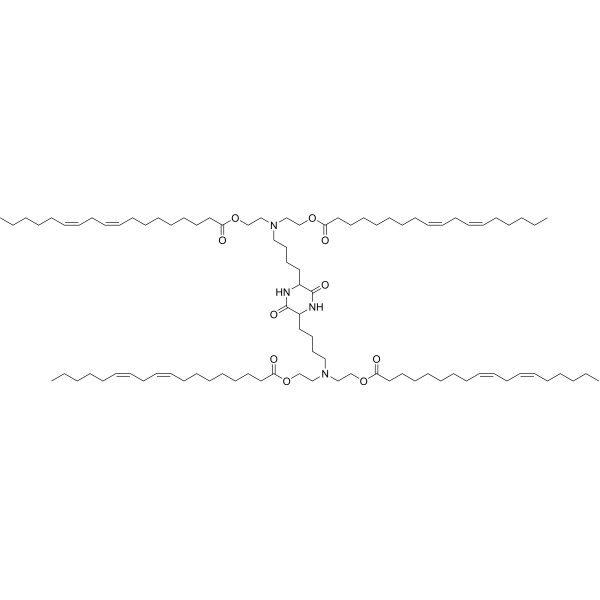
OF-Deg-Lin is a biodegradable lipid containing an ester group, developed from the nonbiodegradable, linoleic acid derived OF-02; mRNA-LNPs containing OF-Deg-Lin showed high expression in the spleen. The ionizable lipid Of-Deg-Lin was synthesized,
which possessed the similar chemical structure with OF-02.Both Of-Deg-Lin and OF-02 had diketopiperazine core and
doubly unsaturated tails, and the difference between them
was that Of-02 contained nondegradable 1,2-amino-alcohol linkages,
whereas Of-Deg-Lin contained degradable ester linkages The change of linker altered iLNPs distribution
and mRNA expression in vivo. Although the Of-Deg-Lin iLNPs
could accumulate in the liver and spleen, they induced the
expression of most functional proteins in B lymphocytes of
spleen (over 85% of the total protein), not in the liver.
Of-Deg-Lin iLNPs can deliver mRNA and express functional
proteins in the spleen specifically, but the mechanism
is unclear.
More description
|
|
| DC80068 | LIPID PL1 |
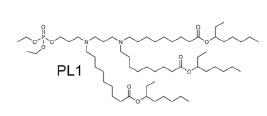
PL1 is a novel biomimetic phospholipid. PL1 nanoparticle delivery of costimulatory
receptor CD137 mRNA improved the immunotherapy with an
anti-CD137 Ab to some extent in both tumor models with better
results obtained in the B16F10 melanoma model as compared to
the A20 lymphoma model.
More description
|
|
| DC81075 | CSL3 |
|
|
| DC60362 | DLenDMA |
DlenDMA is a lipid for RNA and vaccine delivery. DLenDMA showed better siRNA transfection efficiency than DODMA.
More description
|

|
| DC60433 | DOBAQ |
DOBAQ, N-(4-carboxybenzyl)-N,N-dimethyl-2,3-bis(oleoyloxy)propan-1-aminium, is a cationic lipids with a quaternary amine and unsaturated hydrocarbon chains. DOBAQ also serves as a pH-sensitive transfection reagent. Reagent grade, for research use only.
More description
|
.jpg)
|
| DC60492 | 244cis |
|
|
| DC66288 | DOSPA |
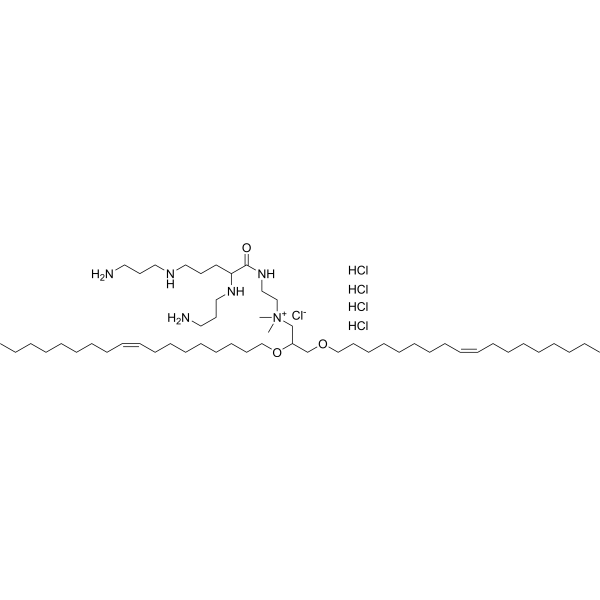
DOSPA is a cationicliposome. DOSPA can formulate with DNA to be a transfection system. DOSPA can be used for gene therapy research.
More description
|
|
| DC48291 | ATX-002 |
ATX-002 is a property-tunable lipid for RNA drug delivery.
More description
|

|
| DC67322 | GL67 pentahydrochloride |
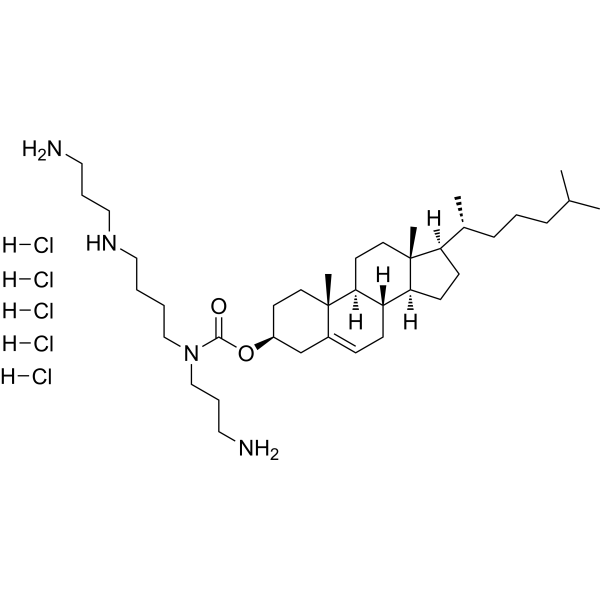
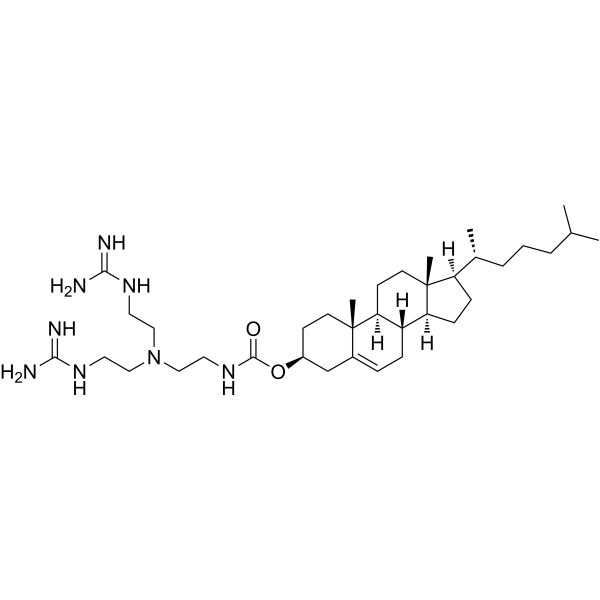
GL67 (N4-Spermine cholesteryl carbamate) in its pentahydrochloride form is a cationic lipid with versatile applications in the delivery of nucleic acid agents, vaccines, and gene transfection, owing to its efficient encapsulation and transport capabilities.GL67 (N4-Spermine cholesteryl carbamate) in its pentahydrochloride form is a cationic lipid with versatile applications in the delivery of nucleic acid agents, vaccines, and gene transfection, owing to its efficient encapsulation and transport capabilities.
More description
|
|
| DC60431 | DODAC |
Dioleyldimethylammonium chloride (DODAC) is a cationic lipid that can be used as transfection reagent.
More description
|

|
| DC66651 | CP-LC-0743 |
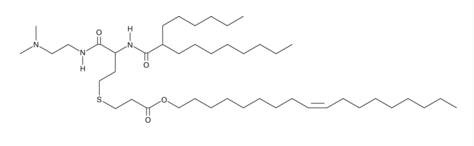
Lipid CP-LC-0743 is an ionizable cationic amino lipid derived from homocysteine, a naturally occurring amino acid. This lipid has demonstrated an efficient delivery and high protein expression of different kinds of RNA (mRNA, cRNA and saRNA) in vivo, with no signs of toxicity.
More description
|
|
| DC67476 | CAP 2 (hydrochloride) |
CAP 2 is a unique ionizable lipid featuring a bicholesterol structure connected by a phosphate linker with an amino terminus. This design enables efficient in vivo delivery of both mRNA and saRNA via LNPs. In a Dmc1-deficient mouse model of male infertility, saRNA-encoded Dmc1 delivered by CAP 2 LNPs demonstrated prolonged protein expression in testicular tissue compared to mRNA formulations. The treatment restored spermatogenesis, improving germ cell maturation, seminiferous tubule morphology, and ultimately yielding functional sperm capable of fertilization.
More description
|

|
| DC65621 | 1,2(R)-Dioleyloxy-3-dimethylamino-propane |
1,2(R)-Dioleyloxy-3-dimethylamino-propane ((R)-DODMA) is an ionizable cationic lipid and an isomer of DODMA
More description
|

|
| DC81060 | ATX-001 |
ATX-001 is a novel ionizable cationic lipid compound for RNA delivery.
More description
|

|
| DC60429 | 16:0 DAP |
16:0 DAP, 1,2-dipalmitoyl-3-dimethylammonium-propane, is a cationic lipid that can be used to formulate lipid nanoparticles (LNPs). 18:0 DAP also serves as a pH-sensitive transfection reagent. Reagent grade, for research use only.
More description
|

|
| DC66528 | 9A1P9 |
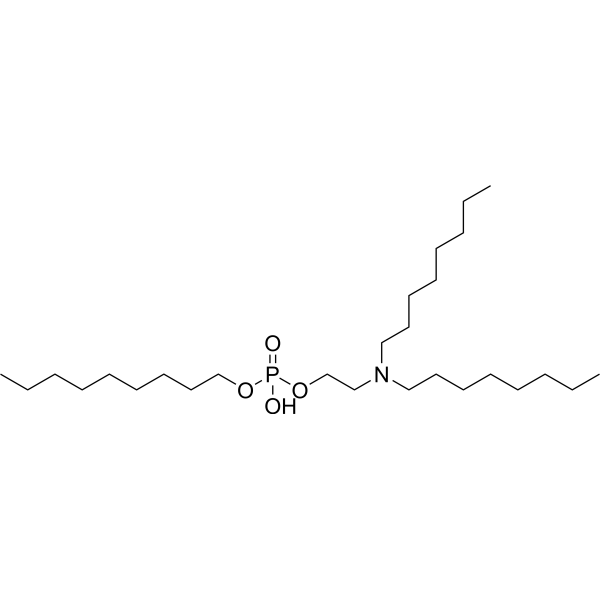
9A1P9 is a multi-tail ionizable cationic phospholipid. 9A1P9 induces membrane destabilization. 9A1P9 can be used for CRISPR-Cas9 gene editing in mice.
More description
|
|
| DC87056 | C12-113 |
C12-113 is a novel polyamine-derived lipidoid for gene delivery.
More description
|

|
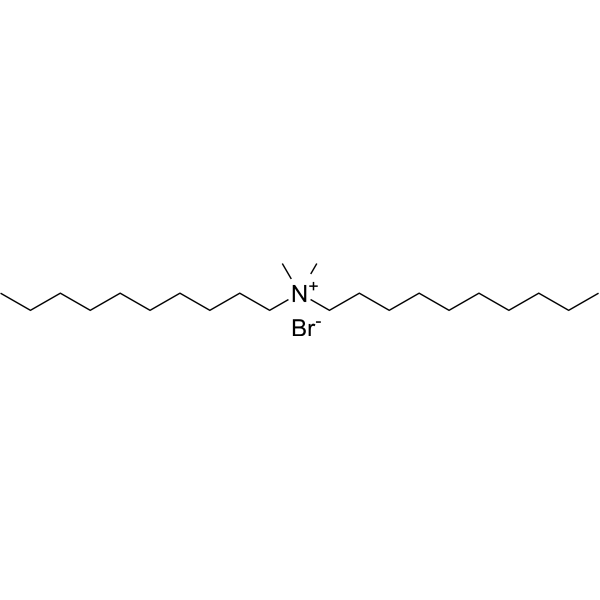
| DC66286 | Di-n-decyldimethylammonium Bromide(DDAB) |
DDAB, also known as dodecyltrimethylammonium bromide, is a cationic surfactant with specific solubility, stability, and storage conditions.
1. Solubility: DDAB is soluble in water and organic solvents such as ethanol and chloroform. It forms clear solutions in water, but can become turbid at high concentrations or low temperatures. It has a higher solubility in organic solvents compared to CTAB.
2. Stability: DDAB is relatively stable under normal storage conditions. However, it can undergo degradation and lose its surfactant properties if exposed to extreme temperatures, humidity, or oxidizing agents for extended periods. It is important to store DDAB in a cool, dry place away from direct sunlight.
3. Storage conditions: DDAB should be stored in a tightly sealed container to prevent moisture absorption and contamination. It is recommended to store it at room temperature (around 20-25°C) or in a refrigerator (2-8°C) to maintain its stability and extend its shelf life.
More description
|
|
| DC60418 | 16:0 TAP |
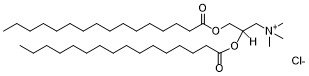
16:0 TAP is a cationic derivative of trimethylammonium linked with two 16-carbon fatty acid tails. 16:0 TAP is a cationic liposome-forming compound that may be used for transfection of DNA, RNA, and other negatively charged molecules into eukaryotic cells. Reagent grade, for research use only.
More description
|
|
| DC60409 | 14:0 TAP |
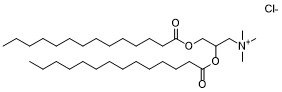
TAP (14:0) A cationic lipids that can be used for drug delivery, gene transfection and vaccine delivery. TAP has been proven to be efficient for in vitro and in vivo transfection applications, which makes it one of the most widely used cationic lipids for gene transfection applications. Reagent grade, for research use only.
More description
|
|
| DC60366 | DLinDAP |
|
|
| DC60365 | BGTC |
|